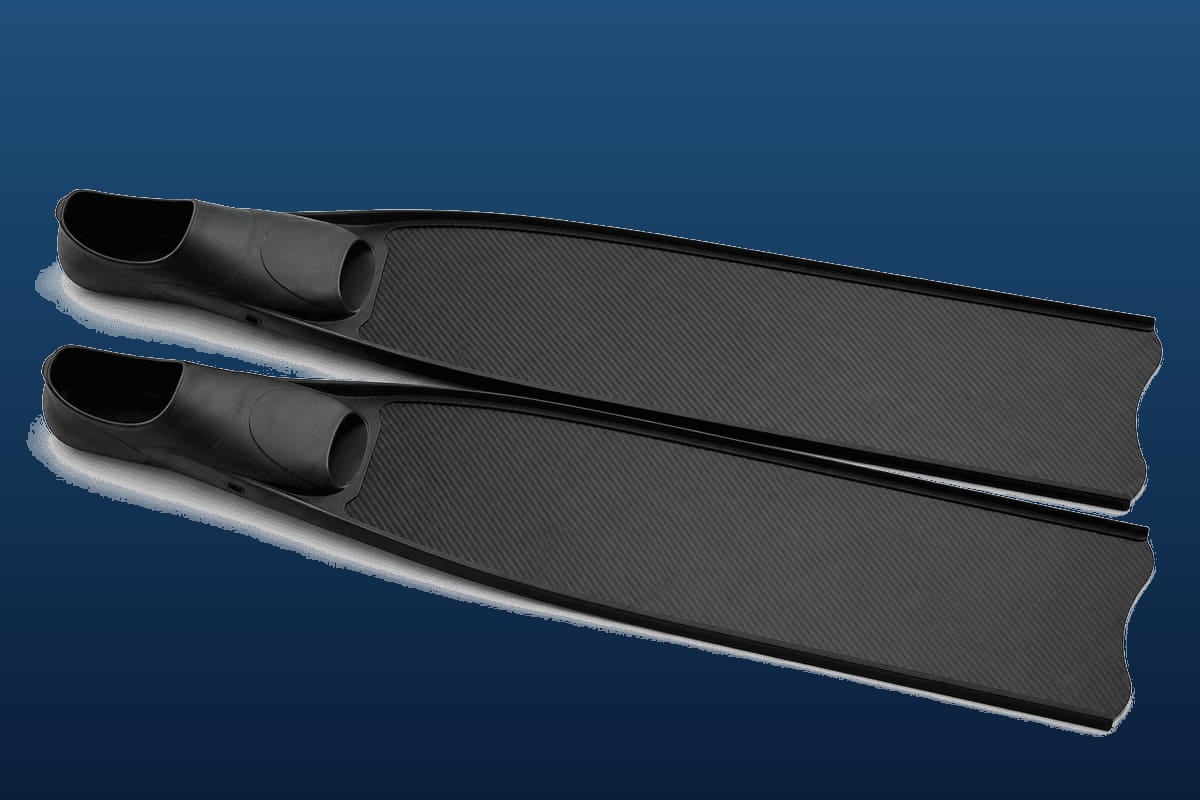
- + Modular design lets you swap blades later
- + Comfortable foot pocket for wide range of sizes
- + Good price-to-performance ratio
- + Available worldwide
- − Blade flex softer than most intermediate divers want after 6+ months
- − Plastic blade has more drag than fiberglass

Overview
Fins are the biggest single upgrade a freediver can make to their efficiency in the water. A well-matched blade extends your glide, reduces kick effort, and saves oxygen on every descent. A poor choice (usually wrong stiffness for your strength and technique level) wastes energy and adds drag.
This guide covers the four categories most divers need to choose between: beginner plastic, mid-range fiberglass, accessible carbon, and competition-grade carbon. The picks are matched to skill level, because the right fin depends more on your kick than on the price.
What to Look for in Freediving Fins
Blade Material
Blade material is the first decision. Plastic blades are soft, flexible, and forgiving, good for learning. They have more drag at depth than stiffer materials, which matters less in shallow water but more past 15-20m. Fiberglass is stiffer and lighter than plastic. The kick is more direct: force applied to the blade comes back as forward movement more efficiently. Most intermediate divers reach a point where fiberglass feels like an obvious upgrade. Carbon fiber has the best stiffness-to-weight ratio of any blade material. When your technique is solid, carbon makes each kick noticeably more productive. When technique is still developing, the stiffness works against you.
Foot Pocket Fit
A poorly fitting foot pocket causes blisters, hotspots, and fin flutter, all of which defeat the efficiency you're trying to gain. Try foot pockets on with the wetsuit socks you plan to dive in. The pocket should hold the foot firmly without pressure points. Some brands (Cressi, SEAC, Mares) have foot pockets that fit a wide range of foot shapes; others are narrower. If standard pockets pinch, the wider Rob Allen Scorpia is built for broad feet.
Blade Stiffness
Blade stiffness is usually rated from soft to hard. The right stiffness depends on your leg strength and kick technique. A blade that's too soft gives no resistance to push against. A blade that's too stiff causes your ankles to fatigue quickly and shortens your effective kick cycle. Most beginners should start soft or medium.
Blade Length
Most adult fins run 75-85cm. Longer blades generate more thrust per kick but require a slower, more deliberate movement. Shorter blades suit divers who like a faster kick rhythm. This is largely preference. Pick based on what feels natural in the water.
How We Ranked These Fins
- Actual in-water propulsion, not just spec claims
- Foot pocket comfort over extended sessions
- Build quality and durability for the price
- Honest fit for the experience level they're marketed at
- Availability in the US market
A Note on Fit vs Performance
The most efficient fin on a diver with poor kick technique is still slower than a beginner fin on a diver who has spent 50 hours in the water. Fins amplify what you already do. They don't substitute for it. Budget and buy appropriately for your current level. Upgrade once your technique stops improving, and if this is your first pair, start with the best freediving fins for beginners.
Our Top Picks
- Just starting
- Cressi Gara Modular. Reliable, forgiving, available everywhere.
- Intermediate, fiberglass
- SEAC Motus. Good stiffness, comfortable pocket.
- First carbon
- Cressi Reaction Pro Carbon. Most of the efficiency benefit at a tolerable price.
- Advanced / depth training
- Molchanovs Flow. When technique and goals match the blade.
What to Avoid
- Scuba fins: too stiff and short for the freediving flutter kick. They increase drag and fatigue.
- Ultra-cheap fins from generic brands: foot pocket quality is usually poor, causing hotspots and flutter.
- Buying the most expensive carbon fins as your first pair: you won't be able to use what they offer.
Best Overall: Beginner to Intermediate
Cressi Gara Modular Fin
Cressi
~$130
- Material
- Composite plastic blade
- Foot pocket
- Open heel
- Blade length
- ~75cm
- Best for
- Beginner to intermediate
One of the most-used entry and intermediate fins on the market for good reason. Consistent flex, reliable foot pocket, and widely available in standard sizes. Not the most efficient blade, but very forgiving to learn on.
- Modular design lets you swap blades later
- Comfortable foot pocket for wide range of sizes
- Good price-to-performance ratio
- Available worldwide
- Blade flex softer than most intermediate divers want after 6+ months
- Plastic blade has more drag than fiberglass
Affiliate link - no extra cost to you
Best Fiberglass: Intermediate
SEAC Motus Freediving Fins
SEAC
~$160
- Material
- Fiberglass blade
- Foot pocket
- Open heel
- Blade length
- ~80cm
- Best for
- Intermediate
Fiberglass blade with a well-balanced flex profile: stiffer than soft plastic, with noticeably better thrust return. The foot pocket is comfortable out of the box, which is not always the case at this price point.
- Fiberglass blade noticeably more efficient than plastic
- Comfortable foot pocket
- Good stiffness for intermediate depth work
- Clean aesthetics
- Fiberglass more fragile than plastic if stored carelessly
- Not available in as many sizes as Cressi
Affiliate link - no extra cost to you
Best Carbon: Advanced / Depth Training
Molchanovs Flow Bifins
Molchanovs
~$350-500
- Material
- Full carbon fiber blade
- Foot pocket
- Molchanovs proprietary
- Blade length
- ~85cm
- Best for
- Advanced / competition
Molchanovs makes some of the most respected carbon blades available. The Flow series is designed for depth training and dynamic disciplines: maximum energy return from each kick cycle. Not worth the price for divers still developing technique.
- Exceptional energy return from each kick
- Very light: reduces fatigue on longer sessions
- Industry-respected brand with strong reputation
- Multiple blade stiffness options
- Expensive (technique needs to match the blade)
- Carbon can crack if dropped on hard surfaces
- Not a beginner purchase
Affiliate link - no extra cost to you
Best Carbon Under $300
Cressi Reaction Pro Carbon
Cressi
~$280
- Material
- Carbon fiber blade
- Foot pocket
- Open heel
- Blade length
- ~80cm
- Best for
- Intermediate to advanced
Cressi's carbon entry in the Reaction Pro offers most of the efficiency benefits of full carbon at a lower price than boutique brands. A good step-up choice for intermediate divers ready to move past fiberglass.
- Carbon efficiency at a more accessible price
- Well-known brand with reliable sizing
- Compatible with standard Cressi foot pockets
- Noticeably stiffer and faster than fiberglass versions
- Not quite the performance ceiling of Molchanovs or Omer
- Blade design has changed between model years
Affiliate link - no extra cost to you