
Gear guides
by category.
Six things divers actually buy. What to skip, what to spend on, and what to wait until your second year for.
Featured buying guides.
Latest guides.
Asked between dives.
The five questions that come up on every boat and at every freediving school. Short, honest answers, the same ones you'd get from an instructor between sets.
01 Do I need to take a course before buying gear? +
Yes, and not just for safety. A proper AIDA or Molchanovs course will tell you what fits your face, your finning style, and your training goals. Buying a 5mm wetsuit before you know if you're a pool diver or a depth diver is the most common (and expensive) mistake new divers make.
02 What's the single most important piece of equipment? +
A low-volume mask. Not fins, not a wetsuit, not a computer. Equalizing a high-volume mask burns air you can't spare past 15m, and a poor seal flooding at depth is the fastest route to a panicked ascent. Spend $60 on a good one before spending $400 on carbon fins.
03 Are carbon fins worth the money for a beginner? +
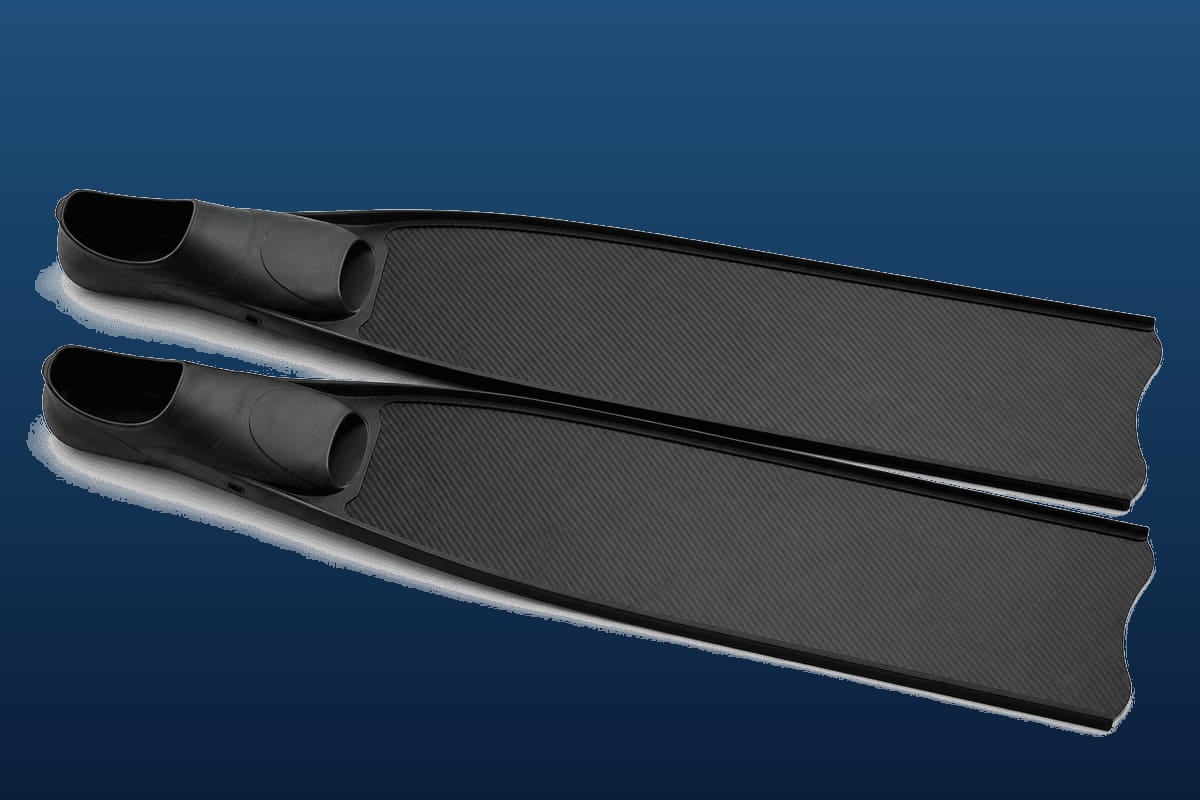
No. Carbon fins are stiff, fast, and unforgiving: they punish bad technique and amplify any asymmetry in your kick. Plastic long fins for your first year, fiberglass for your second, carbon when your kick is clean enough to deserve them.
04 How deep can a beginner freediver go safely? +
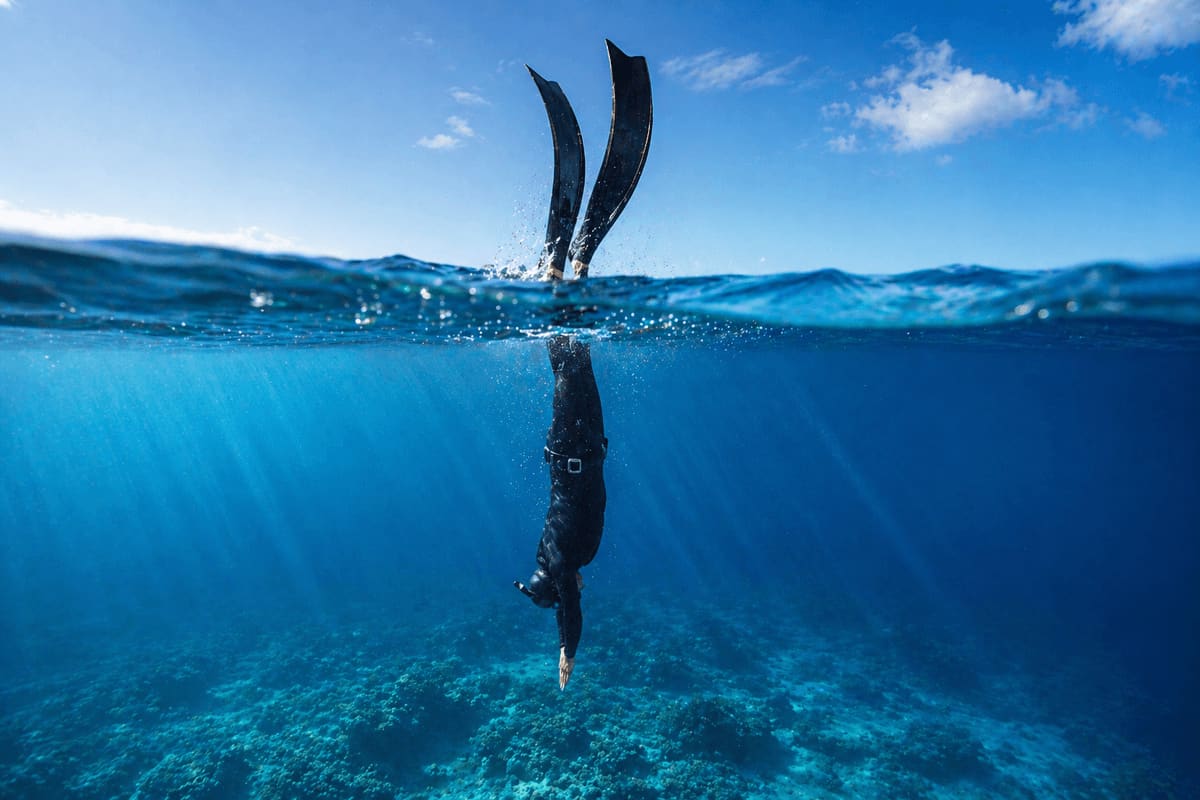
After a proper intro course (AIDA 2★ or Molchanovs Wave 1), most divers reach 12-20m within their first season. Depth isn't the metric that matters: relaxed equalization, clean technique, and a buddy on the line are. Chasing numbers before those three are dialed in is how accidents happen.
05 Can I freedive in cold water with a 3mm wetsuit? +
Below 18°C / 64°F, no: not comfortably, not safely past a few short dives. The cold drains your breath-hold faster than depth does. A 5mm open-cell suit is the honest answer for most temperate water; a 7mm if you're diving year-round in a cold climate.