- + Forgiving blade flex for developing technique
- + Modular for future upgrades
- + Available in wide size range
- − You'll outgrow the blade stiffness in 6-12 months of regular diving

Overview
The shortest version of a beginner gear list: long-blade freediving fins, a low-volume mask, a simple J-tube snorkel, a thin wetsuit matched to your water temperature, and a rubber weight belt with lead weights. That's it. Everything else comes later.
What Order to Buy In
If budget is a constraint, buy in this priority order:
- 01 —Mask: a poorly fitting mask makes every dive frustrating. Leaks, fogging, and pressure issues are all mask problems. Get a good one first.
- 02 —Fins: long blades make the fundamental difference in how efficiently you move through the water. Standard snorkeling fins won't work.
- 03 —Wetsuit: if your water is below 26 degrees C, a wetsuit is necessary for warmth and buoyancy management. Match thickness to water temperature.
- 04 —Weight belt and lead: needed to achieve correct buoyancy with a wetsuit. Budget-friendly component.
- 05 —Snorkel: simple purchase, don't overthink it.
What to Skip for Now
- Dive computer: useful for training, not essential for first sessions. A waterproof watch with basic functions is enough to start.
- Neck weight: once your weighting and trim are established, not before.
- Carbon fiber fins: your technique isn't ready for them yet. See the Best Freediving Fins for Beginners guide.
- Open-cell wetsuit: fragile, requires more care, not worth it until you're diving regularly.
Water Temperature and Wetsuit Thickness
When in doubt, go one thickness warmer: being cold shortens your sessions and affects your breath-hold significantly.
Beginner Fins
Fins: Cressi Gara Modular
Cressi
~$120
- Material
- Composite plastic blade
- Blade length
- ~75cm
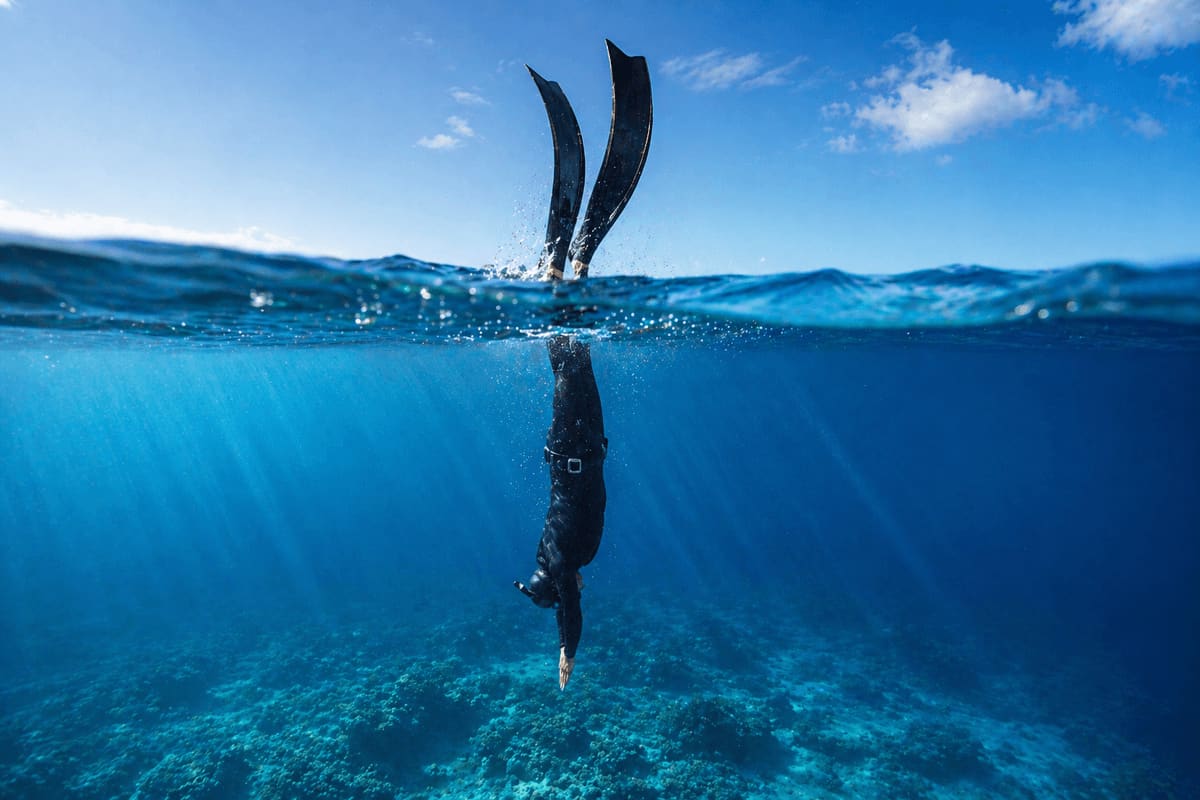
The standard beginner fin recommendation. Soft composite blade, modular design for future blade upgrades, comfortable foot pocket across a wide size range. See our full fins guide for alternatives.
- Forgiving blade flex for developing technique
- Modular for future upgrades
- Available in wide size range
- You'll outgrow the blade stiffness in 6-12 months of regular diving
Affiliate link - no extra cost to you
Beginner Mask
Mask: Cressi Nano
Cressi
~$55
- Volume
- ~100-120ml
- Lens
- Twin lens
Low-volume twin-lens mask that fits a wide range of face shapes. The Nano is consistently recommended for beginner freedivers because it's low-volume (less air to equalize), comfortable, and available everywhere. Seals well on most face shapes without the fit-sensitivity of single-lens designs.
- Low volume, efficient equalization
- Fits wide range of face shapes
- Available and affordable
- Higher volume than single-lens teardrop masks
Affiliate link - no extra cost to you
Beginner Wetsuit
Wetsuit: Cressi 3mm Shorty or Full Suit
Cressi
~$80-130
- Thickness
- 3mm (other options available)
- Type
- Closed-cell neoprene
A 3mm full suit covers most warm to mild water conditions (24-28°C). For colder water, go 5mm. For warm tropical diving, a 1.5-2mm suit or shorty is sufficient. Cressi makes reliable, well-fitting freediving wetsuits at accessible prices. Open-cell neoprene is warmer but more delicate. Closed-cell is more durable and appropriate for beginners.
- Good quality for price
- Closed-cell neoprene, durable for beginners
- Fits well across common sizes
- Not as warm as open-cell at same thickness
Affiliate link - no extra cost to you
Beginner Weight Belt
Weight Belt: Cressi Rubber Weight Belt
Cressi
~$25
- Material
- Rubber strap, metal buckle
- Buckle
- Quick-release
A rubber weight belt with a metal quick-release buckle and threaded lead weights is the standard freediving weight setup. Rubber stretches slightly as you breathe, which is more comfortable underwater than a rigid nylon belt. Add lead weights separately based on your weight calculation.
- Rubber stretches with breathing
- Quick-release buckle for safety
- Standard, proven design
- Low cost
- Lead weights sold separately
Affiliate link - no extra cost to you
Freediving Snorkel
Snorkel: Cressi Corsica
Cressi
~$20
- Type
- Simple J-tube
- Purge valve
- None (standard for freediving)
A simple J-tube snorkel without purge valves or self-draining mechanisms. Freediving snorkels are intentionally simple: purge valves and complex mechanisms add dead air space and weight. The Corsica is a clean, low-volume option that stays out of the way.
- Simple, low dead space
- Comfortable mouthpiece
- Low cost
- No purge valve, must be cleared by exhaling forcefully or tilting
Affiliate link - no extra cost to you