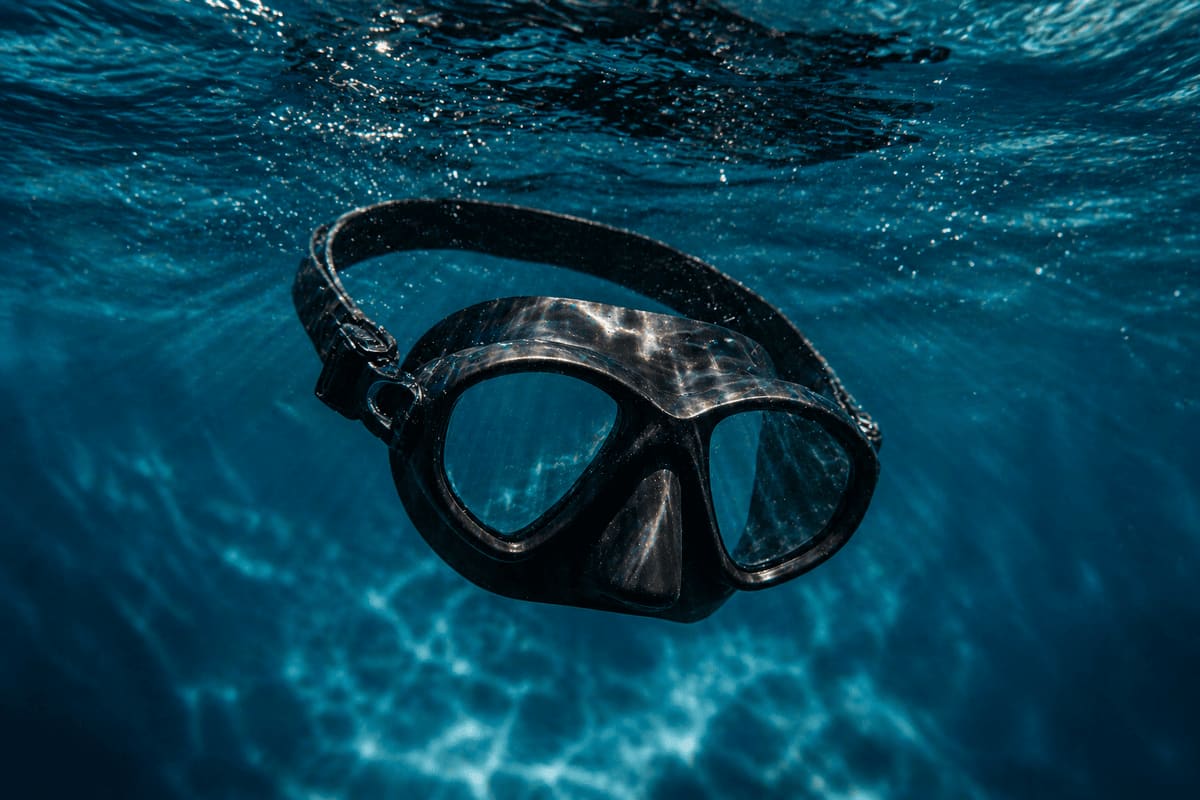
- + Low price makes it low-risk to try
- + Twin lens gives clear peripheral vision
- + Silicone skirt fits a wide range of face shapes
- + Widely available in multiple colors
- − Internal volume not as low as Omer or Salvimar options
- − Strap adjustment could be more robust
- − Not ideal for very narrow faces

Overview
Mask selection is where most beginners make their first expensive mistake. They buy based on looks or price, discover the fit is wrong, and spend the money again. This guide covers what actually matters (volume, skirt fit, and lens quality) and why those three things determine whether a mask works for freediving.
Why Freediving Masks Are Different
The defining feature of a freediving mask is low internal volume: the amount of air space between the lens and your face. At 10m depth, pressure is 2 bar. To prevent the mask from pressing into your face (mask squeeze), you need to exhale a small amount of air into it through your nose to equalize the pressure. The more air the mask needs, the more you spend from your lung supply on every descent.
A standard snorkel or scuba mask might have 300-500ml of internal volume. A purpose-built freediving mask runs 80-150ml, and single-lens teardrop designs such as the Salvimar Drop go lower still, to around 60-65ml. The difference is meaningful when you're working at 20m and every exhale counts. The second difference is profile: freediving masks sit closer to the face, reducing hydrodynamic drag and giving a lower visual field that suits the downward-looking angle of a vertical dive.
What to Prioritize
Skirt Seal
Nothing else matters if the skirt doesn't seal. A leaking mask requires constant clearing, kills your relaxation during descent, and floods your nose at inopportune moments. Test seal before buying by placing the mask against your face without the strap and inhaling through your nose. It should hold for 3-5 seconds without hand support.
Internal Volume
Lower is generally better for serious depth work, but the difference is noticeable mostly past 15-20m. For recreational divers spending most time above 10m, any low-volume freediving mask works fine. At greater depths, every milliliter of air you're not spending on mask equalization is available for the dive.
Lens Quality
Tempered glass is standard at any reasonable price point. Avoid masks with plastic lenses: they scratch immediately and distort vision. Lens geometry affects peripheral vision and visual clarity. Look for minimal distortion in the central field.
Fit by Face Shape
Face shapes vary too much for any buying guide to fully answer this. But general patterns hold:
- Wider faces
- Mares Sealhouette, Cressi Nano. These models have skirts that span a wider profile without gaps at the temples.
- Narrower or medium faces
- Omer Alien, Salvimar Drop. The teardrop or narrow single-lens designs seal better on faces without prominent cheekbones pulling the skirt away.
- If in doubt
- Start with the Cressi Nano. It fits the widest range of faces and costs little enough that replacing it if it doesn't work isn't painful.
Our Top Picks
- Cressi Nano
- First mask for most people. Fits well, costs little, available everywhere.
- Omer Alien
- When you want minimum volume and have a face the narrower fit suits.
- Mares Sealhouette
- Wider face profiles, longer sessions, comfort priority.
- Salvimar Drop
- When you want purpose-built depth gear and the budget to match.
Best Overall: Wide Face Compatibility
Cressi Nano Mask
Cressi
~$50
- Lens
- Twin tempered glass
- Frame
- Low-profile plastic
- Skirt
- Silicone
- Best for
- Beginner to intermediate
The Nano is consistently the first mask recommended to new freedivers for good reason. Low-profile twin lens design, comfortable silicone skirt, and a reasonable internal volume that fits most faces without pressure points. The price is also hard to argue with.
- Low price makes it low-risk to try
- Twin lens gives clear peripheral vision
- Silicone skirt fits a wide range of face shapes
- Widely available in multiple colors
- Internal volume not as low as Omer or Salvimar options
- Strap adjustment could be more robust
- Not ideal for very narrow faces
Affiliate link - no extra cost to you
Lowest Volume: Serious Depth Work
Omer Alien Mask
Omer
~$70
- Lens
- Single teardrop tempered glass
- Volume
- Very low
- Skirt
- Silicone
- Best for
- Intermediate to advanced
The Alien has one of the lowest internal volumes of any mask on the market. The teardrop lens shape sits close to the face, which reduces the air needed to equalize at depth. Fit is more specific than the Nano: works best on narrower or medium-width faces.
- Very low internal volume: less equalization pressure at depth
- Close-fitting profile reduces drag
- Good lens clarity
- Durable build quality
- Narrower fit, not suitable for all face shapes
- Takes some adjustment to find the right strap tension
- Limited color options
Affiliate link - no extra cost to you
Best Skirt Comfort: Wider Faces
Mares Sealhouette Mask
Mares
~$65
- Lens
- Single curved tempered glass
- Volume
- Low-moderate
- Skirt
- Soft silicone
- Best for
- Recreational to intermediate
Mares has refined this design over multiple iterations. The skirt is soft and seals consistently on wider face profiles that the Omer Alien doesn't fit well. Volume is moderate: not the absolute lowest, but comfortable for recreational depth work.
- Excellent skirt seal on wider face profiles
- Very comfortable for extended sessions
- Solid optical quality
- Reliable brand with good warranty support
- Higher internal volume than Omer or Salvimar options
- Not the best choice for divers prioritizing minimum volume at depth
Affiliate link - no extra cost to you
Best Carbon Fiber Frame: Minimal Weight
Salvimar Drop Mask
Salvimar
~$75
- Frame
- Carbon fiber
- Lens
- Tempered glass
- Volume
- Low
- Best for
- Intermediate to advanced
The Drop uses a carbon fiber frame that reduces weight noticeably compared to plastic alternatives. Internal volume is low, and the lens sits close to the face. Aesthetics are clean. A good step up for intermediate divers wanting something purpose-built for depth.
- Carbon fiber frame reduces weight
- Low internal volume
- Clean, minimal design
- Good lens clarity
- Higher price point than Cressi or basic Omer
- Carbon frame can crack if dropped on hard surfaces
Affiliate link - no extra cost to you