- + Anatomical shape designed specifically for freediving
- + Rubber coating protects wetsuit
- + Stays in position through duck dives and free fall
- + Clean build quality
- − Higher price than generic alternatives
- − Limited weight options (1kg and 2kg)

Overview
A neck weight solves a specific problem: feet-heavy trim on descent.
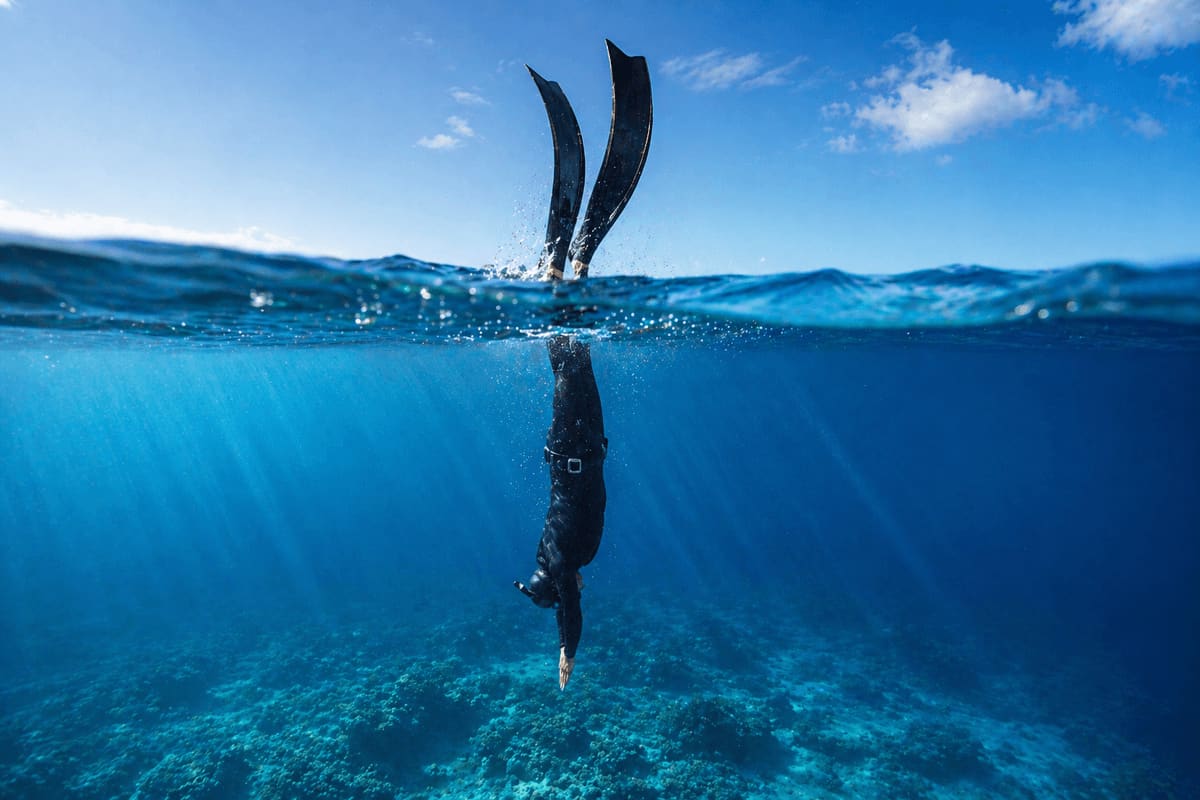
When you're negatively buoyant and entering free fall, your body should be as close to vertical as possible. Feet-heavy diving, where your lower body drops below your head, creates drag that costs oxygen and slows your descent. Moving some weight from the hip belt to the neck shifts your center of mass upward, which levels out the trim.
Most divers in a 5mm or thicker wetsuit notice the problem. Neoprene is buoyant, and the largest neoprene volume is around the torso. This tends to make the chest float slightly while the legs are less buoyant, causing the feet-heavy angle.
How Much Weight and Where
The standard approach: remove some weight from the hip belt and replace it with a neck weight of the same amount. If you need 6kg total and your trim is feet-heavy, try 4kg on the hip belt and 2kg on the neck before making a judgment. Treat the belt and the neck weight as one weight system rather than two separate purchases.
Test the trim in a pool at depth. A correctly trimmed diver should be able to stop finning at neutral buoyancy depth and fall cleanly vertical, without active body positioning.
Start with 1kg on the neck. Adjust from there in 0.5kg increments. Most recreational divers find 1-2kg resolves their trim issue. If you are not yet sure a neck weight helps you at all, a budget option such as the Leaderfins or the Omer neck weight is a cheap way to find out before buying a contoured one.
For full weight setup guidance: Freediving Weight Calculator.
Best Overall
Molchanovs Neck Weight
Molchanovs
~$80
- Weight options
- 1kg, 2kg
- Coating
- Rubber
- Closure
- Quick-release clasp
- Best for
- All wetsuit thicknesses
The Molchanovs neck weight is shaped to sit flush against the back of the neck and upper shoulders without pressing on the throat or restricting rotation. Rubber coating protects the wetsuit from lead contact. Secure closure system that doesn't shift on duck dives. Available in 1kg and 2kg versions.
- Anatomical shape designed specifically for freediving
- Rubber coating protects wetsuit
- Stays in position through duck dives and free fall
- Clean build quality
- Higher price than generic alternatives
- Limited weight options (1kg and 2kg)
Affiliate link - no extra cost to you
Best Value
Salvimar N.A.T. Neck Weight
Salvimar
~$55
- Weight options
- 1kg, 1.5kg, 2kg
- Coating
- Soft rubber
- Closure
- Quick-release
- Best for
- Intermediate to advanced
Salvimar's neck weight uses their N.A.T. (Natural Anatomic Technology) shape that follows the natural curve of the neck. Softer rubber than Molchanovs, which some divers find more comfortable over long sessions. Slightly lower price point with comparable performance.
- Ergonomic shape fits comfortably
- Softer rubber coating, more comfortable for long sessions
- Lower price than Molchanovs
- Reliable quick-release
- Less widely available than Molchanovs
- Rubber coating shows wear faster
Affiliate link - no extra cost to you
Budget Pick
Omer Rubber Neck Weight
Omer
~$45
- Weight options
- 1kg, 2kg
- Coating
- Rubber
- Closure
- Hook clasp
- Best for
- Recreational use
Omer's neck weight is a simple, effective option at a lower price. Less anatomically shaped than Molchanovs or Salvimar, but functional and comfortable enough for most recreational use. Good starting point if you want to try a neck weight before committing to a premium option.
- Lower entry price
- Durable rubber coating
- Works well for recreational diving
- Less refined shape than premium options
- May shift slightly on aggressive duck dives
Affiliate link - no extra cost to you
Lowest Price
Leaderfins Lead Neck Weight
Leaderfins
~$35
- Weight options
- 1kg, 2kg, 3kg
- Coating
- Basic rubber/PVC
- Closure
- Hook
- Best for
- Casual use, budget buyers
Leaderfins offers one of the most affordable neck weight options. The weight is functional but the coating and shape are more basic than the premium options. Suitable for divers who want to experiment with neck weighting without spending much, or as a backup weight.
- Very low price
- Functional for its intended purpose
- Basic shape, not anatomically contoured
- Coating quality lower than premium brands
- May need to pad with neoprene for comfort on long sessions
Affiliate link - no extra cost to you