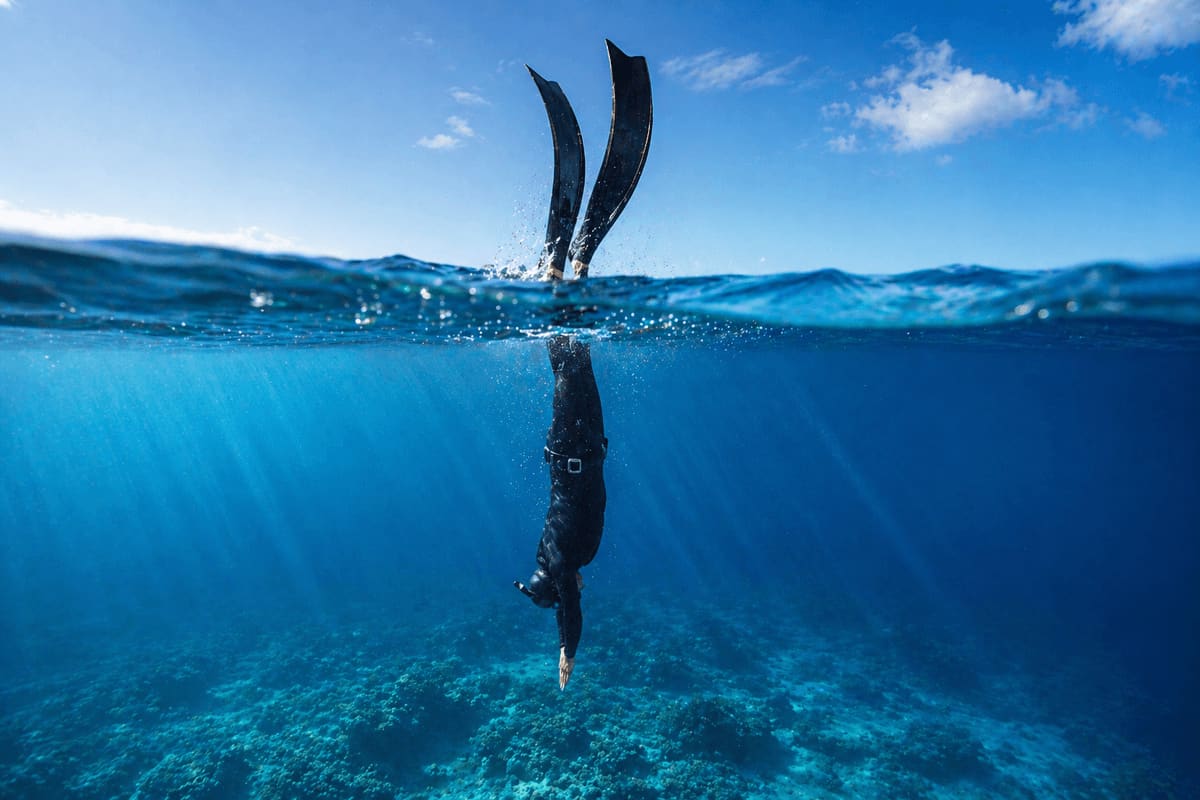
- + Yamamoto-grade neoprene, significantly warmer than standard
- + Two-piece with integrated hood, maximum thermal coverage
- + Sold direct, no retail markup
- + Validated cold-water performance by US Pacific Coast divers
- + Two-piece doubles core warmth (14mm over torso)
- − Camo pattern only, no solid black option in most models
- − Open cell requires lubricant to put on
- − Sizing limited, measure carefully before ordering

The Open Cell Warmth Advantage
The most important fact about freediving wetsuits that generic guides miss: a 3mm open cell suit is approximately as warm as a 7mm closed cell surf suit. This is not marketing. It is the direct result of how open cell works.
Open cell neoprene has a rough, exposed foam interior. When that foam contacts bare skin, it creates a suction-cup effect, tiny pockets of gas bond directly to skin surface with no water layer between them. No water layer means no convective heat loss. The heat that leaves your skin goes nowhere. Closed cell suits have a fabric lining that holds a thin water layer against skin, that water flushes cold water in and warm water out with every movement.
Yamamoto Neoprene Grades
Most premium freediving wetsuits specify which Yamamoto grade their neoprene uses. This matters.
The difference between #39 and #45 is real but not enormous, #45 runs about 10-15% warmer and stretches more cleanly. The difference between Yamamoto (either grade) and petroleum neoprene is significant and worth prioritizing in your buying decision.
US Water Temperatures and Suit Selection
Best Cold Water: US Market
MAKO 7mm 2-Piece Open Cell Freediving Wetsuit
MAKO
~$320
- Thickness
- 7mm two-piece (14mm core coverage)
- Neoprene
- Yamamoto open cell
- Hood
- Integrated
- Best temp range
- 4-14°C (40-57°F)
MAKO sells direct and skips the retailer margin, which is why a Yamamoto-grade open cell suit lands at $320 rather than $450+. The two-piece construction doubles neoprene thickness over the core, your torso gets 14mm total when jacket and pants overlap. The integrated hood eliminates the neck seal gap that loses more heat than any other single area. That combination of 7mm open cell and a hood is what water around 40°F (4°C) calls for. Available in camo patterns only, no plain black option in most models.
- Yamamoto-grade neoprene, significantly warmer than standard
- Two-piece with integrated hood, maximum thermal coverage
- Sold direct, no retail markup
- Validated cold-water performance by US Pacific Coast divers
- Two-piece doubles core warmth (14mm over torso)
- Camo pattern only, no solid black option in most models
- Open cell requires lubricant to put on
- Sizing limited, measure carefully before ordering
Affiliate link - no extra cost to you
Best Premium 5mm: Temperate Water
Beuchat Mundial Elite 5mm
Beuchat
~$260
- Thickness
- 5mm two-piece
- Neoprene
- Yamamoto #45
- Hood
- Integrated
- Best temp range
- 13-20°C (55-68°F)
Beuchat's Mundial Elite line uses Yamamoto #45 neoprene, the higher grade, with a titanium inner coating that adds an infrared reflective layer worth an additional 10-15% warmth per millimeter. The super skin smooth exterior reduces hydrodynamic drag on descent. Designed in collaboration with Pedro Carbonell. The two-piece with integrated hood provides double-layer core warmth. EU sizing runs small, order at least one size up if you are between sizes. Best suited for 13-20°C water where 5mm is the right call.
- Yamamoto #45, highest grade Yamamoto neoprene available
- Titanium inner coating adds infrared thermal layer
- Super skin exterior reduces descent drag
- Two-piece with integrated hood
- Supratex knee and elbow reinforcement
- EU sizing runs small, measure carefully
- Limited North American availability
- Higher price than MAKO for similar warmth category
Affiliate link - no extra cost to you
Best for Beginners: Easier to Put On
Cressi Apnea 5mm Two-Piece
Cressi
~$220
- Thickness
- 5mm two-piece
- Interior
- Blacklite coating (dry-donning)
- Best temp range
- 15-22°C (59-72°F)
Cressi's Apnea line uses their Blacklite interior coating, a treatment that allows dry donning without lubricant. This sacrifices some warmth (the coating reduces direct skin-contact bonding) but makes the suit significantly easier to manage, especially for newer divers not yet practiced in lubricated wetsuit entry. A 5mm Blacklite-lined suit is approximately as warm as a 4mm full open cell suit. Widely available in the US. Good starting point before investing in premium Yamamoto open cell.
- Blacklite coating allows dry donning, no lubricant needed
- Widely available in the US market
- Good entry price for 5mm two-piece
- Reliable Cressi quality control
- Blacklite coating reduces warmth compared to full open cell
- Not as warm as Beuchat Mundial or MAKO for equivalent thickness
- Two-piece hood is separate, not integrated
Affiliate link - no extra cost to you
Best Custom Fit: Serious Cold Water Divers
Elios Sub 7mm Custom Wetsuit
Elios
~$420
- Thickness
- 7mm (custom)
- Neoprene
- Yamamoto #45
- Fit
- Custom to measurements
- Best temp range
- 4-14°C (40-57°F)
Elios Sub makes custom-fitted open cell wetsuits using Yamamoto #45 neoprene with Aurora Nano Capsule Superskin exterior. Custom fitting is included in the base price. They send you a measuring guide and build to your exact dimensions. For divers who train year-round in cold water, the custom fit eliminates the warmth loss from gaps and bunching that off-the-shelf suits create. The Aurora Nano Capsule exterior is more durable than standard smooth skin. Delivery takes 4-6 weeks. The most expensive option here but the longest-lasting if maintained correctly.
- Custom fit included, no premium for exact dimensions
- Yamamoto #45 open cell, highest grade neoprene
- Aurora Nano Capsule exterior, more durable than smooth skin
- Best long-term value if training regularly in cold water
- 4-6 week delivery time
- Highest price on this list
- Requires accurate self-measurement
- Limited return/exchange options on custom items
Affiliate link - no extra cost to you
Best for Freediving and Spearfishing
Neptonics Quantum Stealth 7mm
Neptonics
~$300
- Thickness
- 7mm two-piece
- Neoprene
- Yamamoto #39 open cell
- Best temp range
- 7-15°C (45-59°F)
Neptonics is a US brand based on the Pacific Coast and designs their suits for the specific conditions of North American cold-water freediving. The Quantum Stealth 7mm includes an integrated knife pouch, safety whistle in the shoulder seam, and a 10mm chest loading pad for spearfishing. Yamamoto 39 open cell construction. For divers who combine freediving with spearfishing, the practical features justify the price difference over a pure freediving suit.
- US Pacific Coast brand, designed for local cold water
- Integrated knife pouch and safety whistle
- 10mm chest loading pad for spearfishing
- Yamamoto 39 open cell construction
- Primarily Pacific Coast sizing, may not suit all body types
- Less known internationally than Beuchat or Cressi
- Knife/spearfishing features add weight
Affiliate link - no extra cost to you