
The Core Difference
The two sports both involve underwater diving. That's where the similarity ends. The gear is different. The physiology is different. The experience underwater is fundamentally different.
- Scuba diving
- you breathe compressed air from a tank throughout the dive: stay down as long as your air supply lasts, typically 30-60 minutes at recreational depths
- Freediving
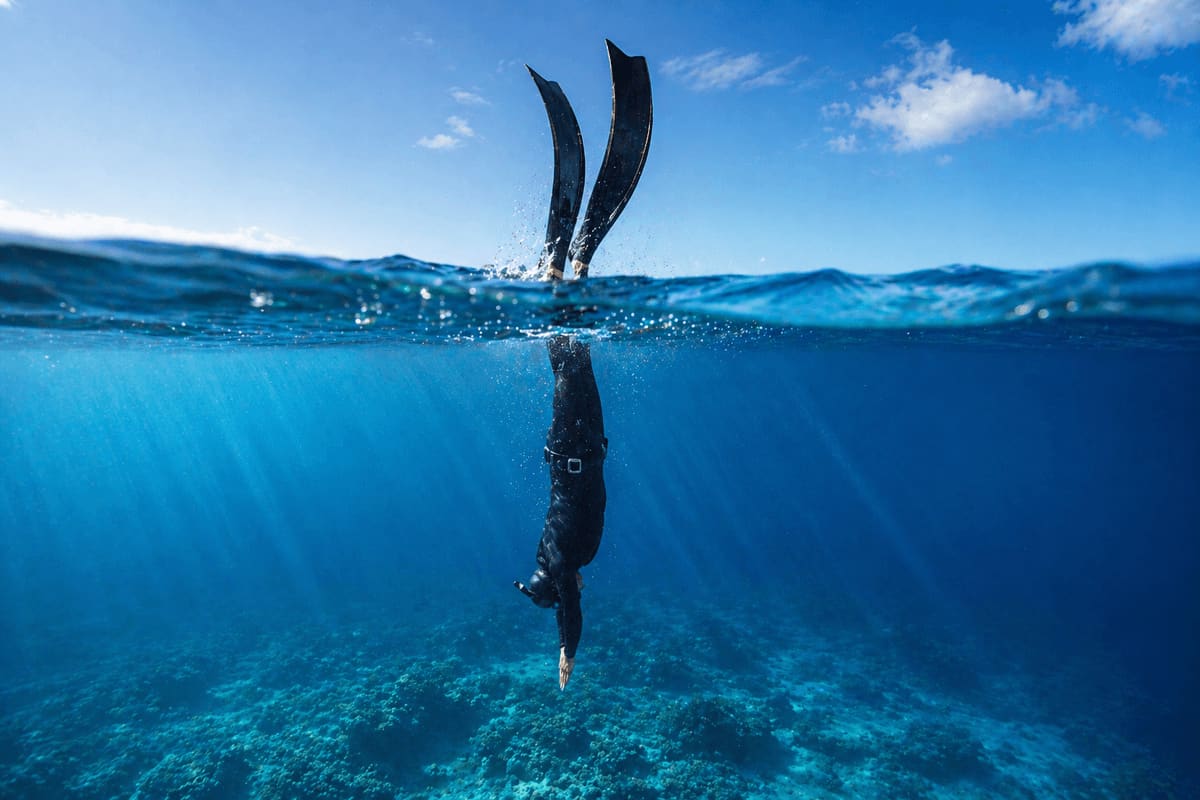
- you hold your breath on the surface, dive on a single inhale, and surface before your oxygen runs out, each dive lasts 1-3 minutes for most recreational freedivers
Side-by-Side Comparison
The Experience Underwater
This is where the two sports diverge most clearly.
- Scuba
- you're breathing constantly, every breath creates noise and bubbles. You hover effortlessly. Extended wreck exploration, long reef traverses, and detailed marine observation are all possible.
- Freediving
- silence. No gear in your mouth. You're moving through water like a fish. Marine animals (fish, dolphins, whales) react differently to a silent diver than to a bubbling scuba set.
The limitation: each dive is a countdown. What you can do in 1-3 minutes is limited by depth and efficiency. But many divers find this focus more satisfying than extended scuba dives. Our guide to how deep you can freedive sets out realistic depth targets for each stage.
What Each Is Best For
Training and Certification
- Scuba (PADI Open Water)
- 3-5 days. Equipment operation, buoyancy control, dive planning, emergency procedures. Mostly procedural skills. Most students become independently confident within the course.
- Freediving (AIDA 2 / SSI Level 1)
- 1-2 days for the course. But real competence at depth takes weeks of practice. Equalization especially requires time. The course gives you a foundation; depth develops over months.
Which to Learn First
Start with freediving if:
- You want to spearfish
- You're drawn to minimalism and the breath-hold challenge
- Budget matters, gear and course cost significantly less
- You want to travel light
Start with scuba if:
- You want extended bottom time for reef or wreck exploration
- You're not confident in open water and want unlimited breathing
- Your target dive sites require depth
- Your location has strong scuba infrastructure
Learn both if the ocean is a serious part of your life. The skills complement each other: freediving builds breath awareness, water comfort, and finning efficiency that makes you a better scuba diver too. If you are starting from zero, the guide on how to freedive covers the first steps, and the freediving certification comparison helps you choose a course.