
The Short Answer
Freediving is one of the cheaper underwater sports to get into. There are no tanks to fill, no regulators to service, and no yearly equipment inspections. The two real costs at the start are a training course and a basic set of personal gear.
For most beginners, the smart first spend is a proper freediving certification followed by a small kit of a mask, snorkel, and long fins. Everything else can wait until you know you enjoy the sport and dive often enough to justify it.
Below is the honest breakdown: what the course costs, what each piece of gear costs, what you pay to keep training, and what you can safely skip early. All prices are in US dollars and reflect current retail ranges.
Course Cost
A beginner certification is the single most valuable thing you can buy. It teaches equalization, buddy rescue, safe breathing, and depth progression, all of which are difficult and risky to learn alone. The three main agencies, AIDA, PADI, and SSI, all offer an entry level course that runs 2 to 3 days.
Price depends heavily on location. A course in a landlocked city with only pool sessions sits at the low end. A warm-water destination course with boat access, like Florida or Hawaii, often runs higher because of the travel and vessel costs baked in. Read our guide to picking an agency and level in the best freediving certification before you book.
Most beginner courses include rental gear for the pool and open water sessions. That matters because it means you can complete a full certification without owning a single piece of equipment. Confirm this before booking so you are not surprised by rental fees on the day.
If you are unsure whether to commit to a full certification, many schools offer a single introductory session for $75 to $150. It is a low-cost way to learn how to freedive with an instructor and decide if the full course is worth it for you.
Gear Cost by Item
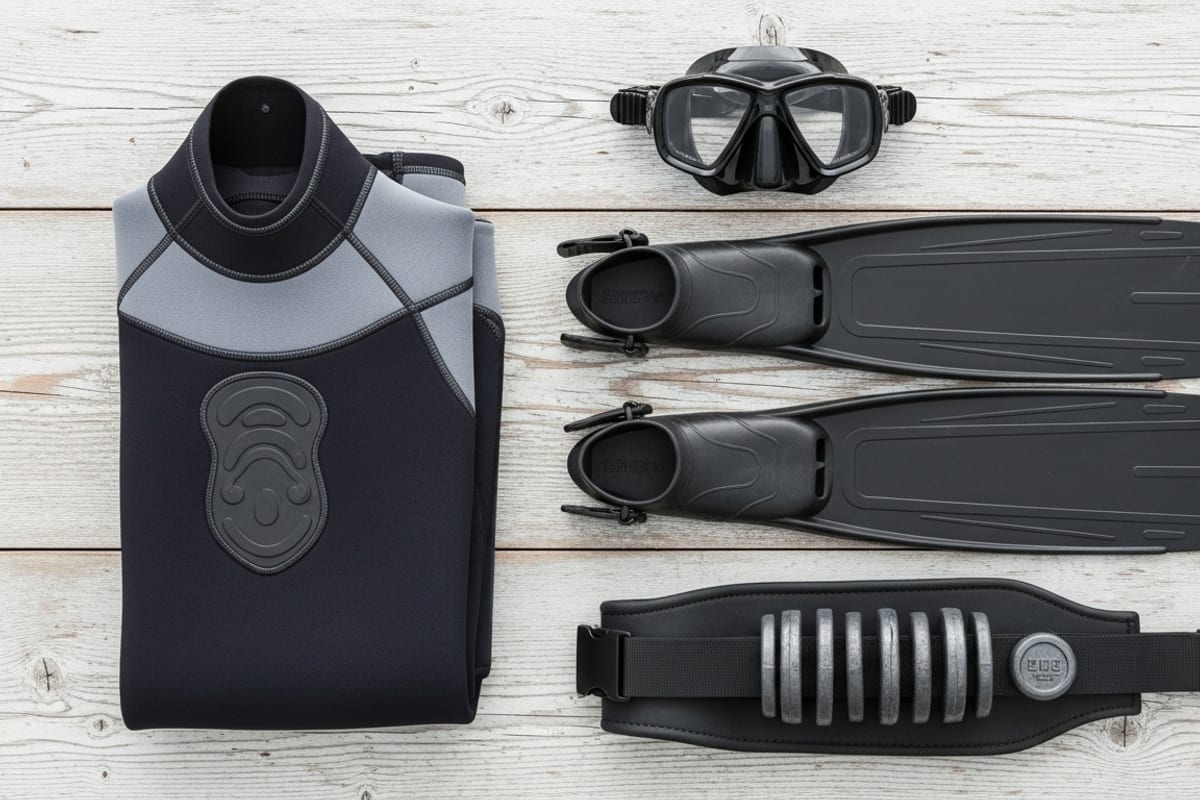
Once you decide to keep diving, personal gear is the next cost. The good news is that you do not need all of it at once. Here is each item with a realistic budget-to-premium range, followed by notes on what actually matters early.
Mask and snorkel
Start here. A low-volume mask is easier to equalize at depth and costs $40 to $120 with a simple snorkel. This is the one piece almost nobody regrets buying early, since a rental mask that leaks ruins a session.
Long fins
Freediving fins are long and soft, very different from scuba fins. Plastic fins at $80 to $150 are perfectly good for the first year. Fiberglass and carbon blades cost far more and give real efficiency gains, but a beginner will not feel the difference yet. Our roundup of the best freediving fins for beginners covers plastic options that punch above their price.
Wetsuit
An open-cell freediving wetsuit in 3mm to 5mm runs $150 to $400 depending on brand and whether it is off-the-rack or custom. It fits tighter and warmer than a scuba suit. If you dive cold water you will want thicker neoprene, and in warm tropical water a budget closed-cell suit such as the IST 3mm, at around $80, is enough to start. See our freediving wetsuit guide for how to pick thickness by water temperature.
Weights, lanyard, and open water kit
A weight belt with lead runs $40 to $90 and you need it the moment you wear a wetsuit, since neoprene floats. A lanyard, which clips you to the dive line, is a safety essential for depth work at $30 to $80. A surface buoy and line for open water sessions adds $120 to $300 and is usually shared within a club or bought later.
Ongoing Costs
Gear and the course are mostly one-time spends. The recurring costs are what keep you diving and improving. These vary a lot by where you live and how seriously you train.
- Pool sessions or lane rental
- $10-25 per session, or a club pool night often included in membership
- Club membership
- $100-300 per year, usually covering pool access and organized dives
- Private coaching
- $50-120 per hour for one-on-one instruction on technique or depth
- Refresher or higher-level courses
- $250-500 each as you progress to intermediate and advanced levels
- Travel to depth or trips
- highly variable, from a local quarry day trip to a week-long training camp abroad
Pool training is where most beginners build breath hold and technique cheaply. A club pool night is often the best value in the sport. If you are new to structured training, our guide on how to freedive explains what to practice before you spend on coaching.
Travel is the wildcard. Many freedivers spend nothing extra for a year, then take one destination training trip that costs more than all their gear combined. That is a choice, not a requirement, and plenty of divers stay happy in local pools and lakes.
Realistic Totals
Here is how the pieces add up across three honest scenarios. The bare minimum assumes you take a course with rental gear included and buy only the essentials afterward. The first-year setup is what most committed beginners land on. The premium setup is what you might reach after a year or two if you love the sport.
Most beginners fall into the middle row and spend $650 to $1200 in their first year, including the course. That buys a full personal kit good enough to train and dive for years. You do not need the premium column to enjoy freediving or to dive safely. Our freediving starter kit guide lists a specific build that hits the sensible first-year budget.
What to Skip Early
The fastest way to overspend on freediving is buying advanced gear before you need it. Here is what a beginner can honestly leave for later without any downside to safety or progress.
- Dive computer or watch: useful for depth training, but a pool and shallow beginner does not need one. Buy it when you start depth work.
- Carbon fins: real efficiency gains, but a beginner will not feel them. Plastic fins are the right first purchase.
- Custom wetsuit: an off-the-rack open-cell suit is fine to start. Go custom once you know your discipline and fit needs.
- Personal buoy and line: usually shared in a club or provided on trips. Buy your own only when you dive open water regularly.
One thing you should never skip is the course itself. The gear can be minimal and cheap, but training is what keeps freediving safe. A freediving watch is a nice upgrade later, not a starting requirement.