
The Core Difference
Snorkeling and freediving both start the same way: mask on, face in the water, watching the world below. The moment you decide to leave the surface, they split into two very different activities. If you are brand new to breath-hold diving, it helps to first read what freediving actually is before comparing it to snorkeling.
- Snorkeling
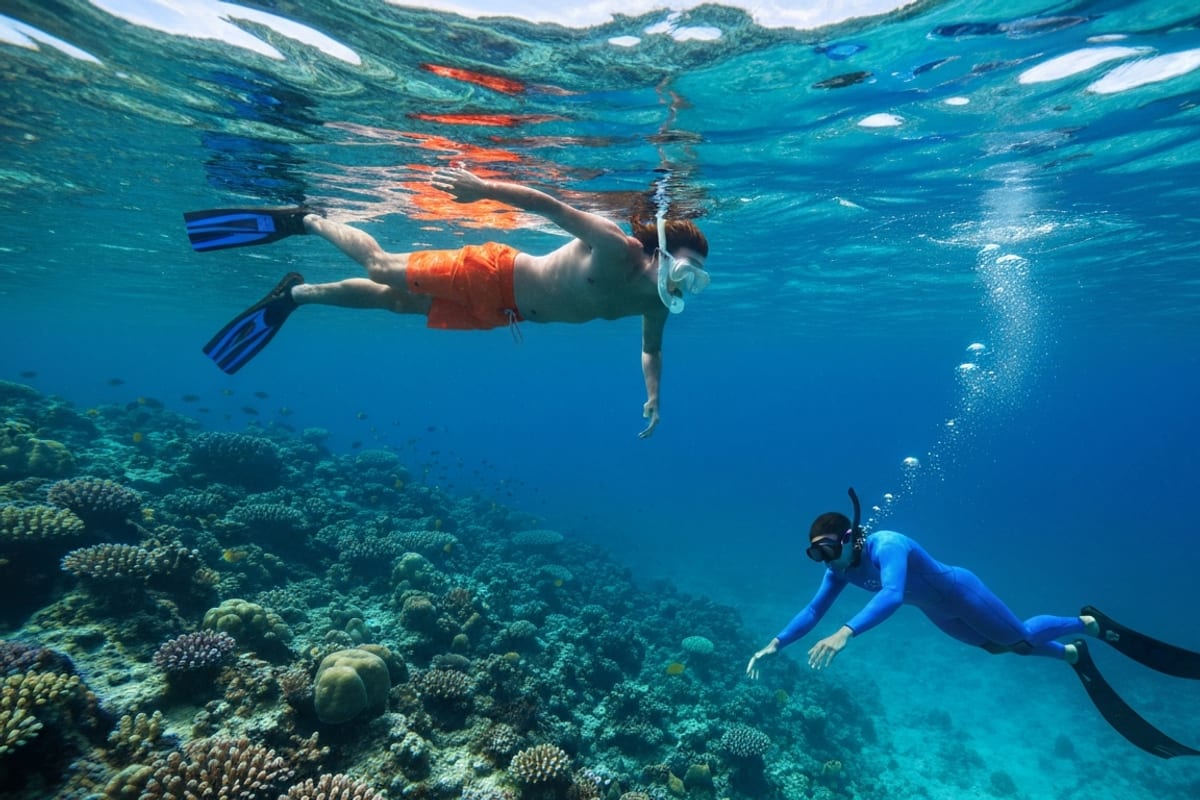
- you float at the surface and breathe continuously through a snorkel. Your goal is to observe the reef or marine life from above. You stay in roughly the top meter of water and rarely leave the surface.
- Freediving
- you take one breath, hold it, and descend on a single lungful of air. Your goal is to go down, whether to explore, photograph, spearfish, or train depth. You return to the surface to breathe again.
That difference in breathing is the root of every other difference in gear, skill, safety, and cost. Snorkeling is a passive surface activity. Freediving is an active descent that demands relaxation, technique, and a plan. For a fuller picture of what the sport involves, see our guide on how to freedive.
Side-by-Side Comparison
Here is how the two activities line up across the factors that matter most for a beginner making a choice.
Gear Differences
You can technically freedive in snorkel gear on your first try, but you will fight it quickly. The equipment for each activity is tuned for a different job.
The mask
A snorkel mask has a large air pocket in front of your eyes, which is fine at the surface. As you descend, that air pocket compresses and pulls the mask onto your face, so you have to blow air into it constantly. A low volume freediving mask holds far less air, which means less to equalize and less drag. The difference is significant enough that we cover it in detail in freediving mask vs snorkel mask, and if you want the ideal choice for depth, see the low volume freediving mask guide.
The snorkel
Snorkelers use a snorkel the whole time. Freedivers use one only at the surface, then remove it from the mouth before descending so it cannot cause problems on a blackout. Freediving snorkels are simple, purge-free tubes for exactly this reason, which we break down in the freediving snorkel guide.
Fins, wetsuit, and weights
- Fins: snorkelers use short, stiff fins for surface paddling. Freedivers use long blades that move more water per kick for efficient descent and ascent.
- Wetsuit: snorkelers often wear little or nothing warm. Freedivers wear a wetsuit for warmth during longer sessions and repeated dives.
- Weights: a wetsuit floats, so freedivers add a weight belt to reach neutral buoyancy. Snorkelers almost never need weights.
Skill, Training, and Safety
This is the most important part of the comparison, because it is where the real risk lives. Snorkeling is largely passive. Freediving is not.
- Snorkeling skill
- you need to be comfortable in water and able to swim. That is close to the whole list. Breathing is continuous, so oxygen is never a concern.
- Freediving skill
- you need to equalize your ears as pressure builds, relax to conserve oxygen, control your finning, and read your own limits. These skills develop over weeks and months, not minutes.
This is why a certification course matters. No agency legally requires it, but a beginner freediving course teaches breath-hold physiology, safe depth progression, and how to rescue a buddy who blacks out. Snorkeling needs none of this training because you never depend on a held breath. The safety gap is also the biggest divider between freediving and scuba, which we compare in freediving vs scuba diving.
Is Freediving Harder Than Snorkeling?
Yes, clearly. Snorkeling has almost no learning curve. If you can float and breathe through a tube, you are snorkeling. Freediving asks more of your body and your mind, and it rewards patience rather than effort.
Freediving is harder because it demands:
- Equalization of the ears on every descent, a skill that frustrates many beginners at first
- Deep relaxation, since tension burns oxygen and shortens every dive
- Comfort with the urge to breathe, which is driven by rising carbon dioxide, not lack of oxygen
- A reliable buddy system and the discipline to never dive alone
The upside of the harder path is a completely different experience. Freediving is silent, unhurried, and lets you move through the water like the marine life around you rather than watching from above.
How to Move From Snorkeling to Freediving
Most freedivers started as snorkelers, so this is a well worn path. The key is to add skill and safety before you add depth, not the other way around.
- 01 —Get relaxed at the surface first. Spend time snorkeling until floating face-down and breathing calmly feels effortless.
- 02 —Take a beginner course such as AIDA 2 or SSI Level 1. This is the single most valuable step for safety and progress.
- 03 —Upgrade your core gear: a low volume mask, long fins, and a wetsuit with a weight belt sized to your suit.
- 04 —Learn to equalize on descent before you chase depth. Practice the technique in shallow water until it is automatic.
- 05 —Always dive with a trained buddy who watches every dive to the surface. Make one-up, one-down your rule.
- 06 —Build depth and breath-hold slowly over many sessions. Never push past comfort, and never train breath-hold alone in water.
If you follow that order, the transition is safe and steady. Freediving is harder than snorkeling, but the gap closes fast once you have proper training and a buddy you trust.