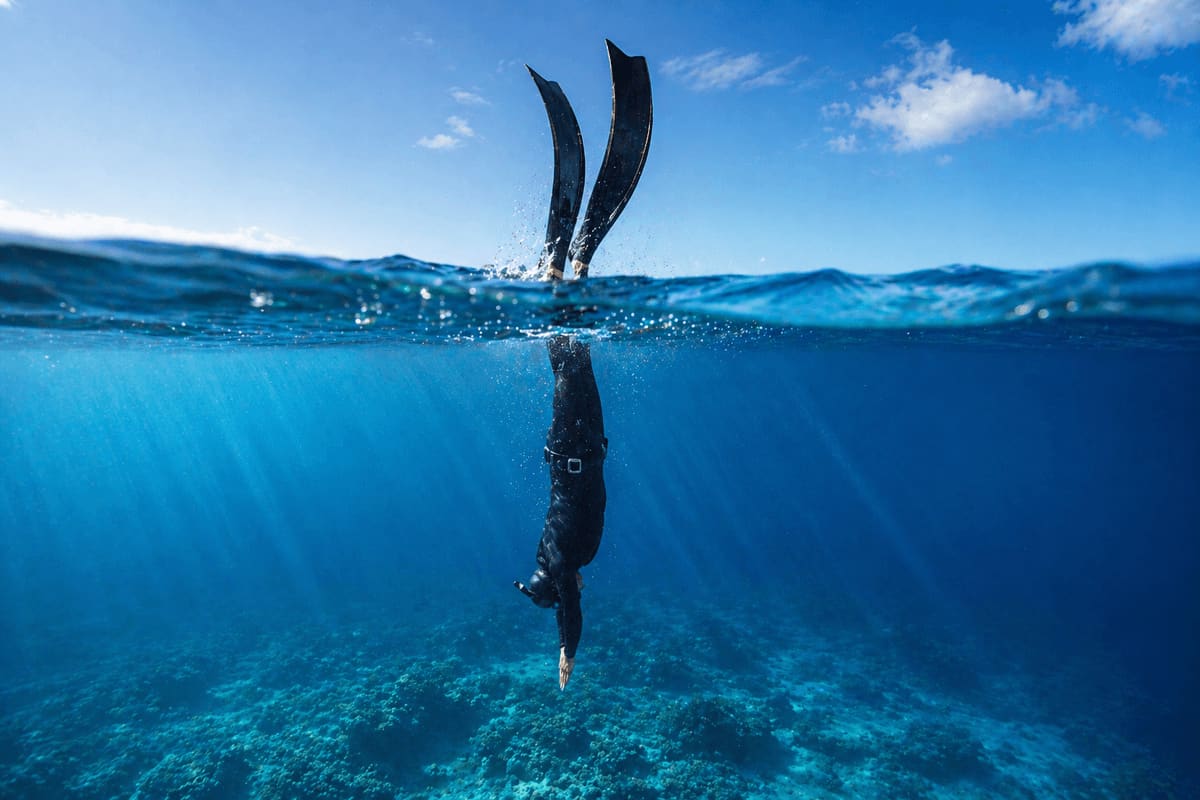

Why Croatia belongs in every freediver's itinerary
The Adriatic Sea is an anomaly. It's a semi-enclosed arm of the Mediterranean with restricted tidal flow, minimal freshwater dilution in summer, and a basin geography that produces visibility values, 30-40 metres is routine at top sites, that rival the Red Sea. Croatia's national parks and protected marine areas mean significant stretches of coast have escaped the overfishing and anchor damage that degrade sites elsewhere in the Mediterranean. The result is reef structure and fish density that justifies the trip on its own.
Croatia also offers something most European freediving destinations can't match: variety. Within a day's travel from Split you can access clear offshore island walls, WWII wreck dives at 15-30m, shallow cave systems, and the dramatic Blue Cave at Biševo. The island chain runs for 1,000km along the Dalmatian coast. There's enough to fill multiple trips. Prices for accommodation, food, and diving instruction are substantially lower than France, Italy, or Spain.
The key freediving sites in Croatia
Croatia's dive sites fall into five zones worth planning around. The islands closest to Split offer the best combination of site quality and infrastructure.
Vis Island, the pinnacle of Croatian freediving
Vis is the furthest inhabited island from the Croatian mainland, 45 minutes by high-speed catamaran from Split. That distance kept it off-limits to foreign tourists during the Yugoslav era and is largely responsible for its exceptional marine state today. The walls around Vis, Biševo, and the surrounding reefs are among the healthiest in the Adriatic.
- Stiniva Cove
- A famous pebble beach accessible only by sea, surrounded by sheer 100m limestone cliffs. The entry crevice is narrow enough to swim through at surface, and the inside reveals a sheltered cove with reef walls dropping to 20-25m. The shallow outer reef is excellent for warm-up dives. This is one of Croatia's most photographed sites for a reason.
- Blue Cave (Modra Spilja) at Biševo
- A sea cave on the small island of Biševo, 5km southwest of Vis. Between 11am and 12pm in summer, sunlight enters through a submerged opening and illuminates the interior in electric blue. Freedivers can swim through the submerged entrance (approximately 2m deep) to enter, the standard tourist access by dinghy does not allow this. Boat trip from Komiža required.
- Vis Outer Walls
- The southwest and northwest faces of Vis have wall dives dropping to 40m+ from shore in several locations. Exceptional visibility, resident grouper and amberjack, and coral cover that's noticeably more intact than most Mediterranean sites. Boat or kayak access to reach the best sections.
- Wrecks near Vis
- Vis was a significant WWII theatre. Several accessible wrecks exist in 10-35m around the island. The Tara wreck and others are diveable by intermediate freedivers. Check with local operators for current permit requirements and exact locations.
Kornati National Park, clear-water reef walls
The Kornati archipelago is 89 islands and islets in a 35km stretch of northern Dalmatia, about 2 hours from Split by boat. The park has strict protections (no fishing, no anchoring on reef) which shows in the marine environment. Walls drop to 40m in several places with sponge coverage and coral diversity that exceeds most of the Dalmatian coast. Access is by boat only; no ferries run to the outer islands.
- Diving zone
- The outer Kornati walls, particularly the south-facing coast of Kornat island, are the headline sites. Sloping reef from 5m to 40m+ with excellent coral cover and fish density. Visibility regularly exceeds 30m in calm summer conditions.
- Access
- Boat trip from Šibenik (closest town) or from Murter island, which has regular boat services. A full-day freediving charter from Šibenik reaches the best outer sites. Overnight liveaboard trips are available and worth the cost for serious divers.
- Conditions note
- Bura wind (northeasterly) can make conditions rough in the park with little warning, especially in spring and autumn. Always check forecast before heading to the outer islands. The sheltered inner channel between the outer islands is calm even in moderate bura conditions.
Šolta and Brač, accessible from Split
Šolta and Brač are the islands immediately south of Split, 30-60 minutes by ferry. Both have good freediving accessible on a day trip from the city. The south-facing coasts of both islands have clean walls and reef systems at 10-30m, shore-accessible at several points. Visibility is slightly lower than Vis (typically 15-25m) due to closer proximity to Split's shipping traffic, but conditions are consistent and the ferry logistics are simple.
Hvar, diving with style
Hvar town is Croatia's most famous party destination, which does mean crowds and higher accommodation prices in July-August. But the freediving around Hvar Island itself and the Pakleni Islands immediately off the west coast is excellent: clear shallow bays, underwater caves, and walls to 30m. Hvar-based freediving centers run day-trips to sites not reachable from shore and can arrange equipment rental and buddy services for independent divers.
Dubrovnik and the Elaphiti Islands
The Dubrovnik area is the southernmost major freediving hub. The Elaphiti Islands (Kolocep, Lopud, Šipan) are a short boat ride from the old city and offer reef walls and caves accessible in day trips. Visibility around Dubrovnik tends to run 10-20m rather than the 30-40m of Vis or Kornati, but the site variety is good and it's a natural add-on for anyone already visiting the old town.
Freediving courses and centers in Croatia
Certified freediving instruction in Croatia is concentrated in three cities: Split (most options, best infrastructure), Hvar (quality instruction, boutique centers), and Vis (small centers, best site access). Dubrovnik has a handful of recreational dive centers offering introductory freediving experiences, and Zadar is a growing hub for northern Dalmatia.
When to go, seasons and site conditions
September is the strongest single month for most freedivers: the water retains summer warmth, visibility is excellent, accommodation prices drop, and the tourist volume on the islands falls significantly from the August peak. If you can only pick one month, September.
Getting there and practical logistics
- Flights
- Fly to Split Airport (SPU) for access to the central Dalmatian coast: Vis, Hvar, Šolta, Brač, Kornati. Or Dubrovnik Airport (DBV) for the southern sites. Direct flights from most European hubs; from the US, typically one connection via Frankfurt, London, or Amsterdam. Budget airlines (Ryanair, easyJet, Wizz Air) operate seasonal routes that reduce costs significantly in summer.
- Getting around, ferries
- Croatia's island network runs on Jadrolinija car ferries and Krilo/Kapetan Luka high-speed catamarans. Split-Vis by high-speed catamaran: 1h45m-2h20m, runs 2-3 times daily in summer. Split-Hvar: 1h by catamaran or 2h by car ferry. Timetables change seasonally, check jadrolinija.hr before planning tight connections. Island-hopping is possible but requires overnights; day-tripping from Split is feasible.
- Accommodation
- Apartments (apartmani) are the standard Croatian island accommodation: often run by local families, frequently excellent value at $60-130/night for a unit in summer. Split has hotel options across all price ranges. On Vis, staying in Komiža (the smaller western town) gives better freediving access than Vis town. Book July-August accommodation early, the islands fill up.
- Equipment rental
- Mask, fins, and wetsuit rental is available from freediving centers in Split, Hvar, and Vis. If you have a fitted low-volume mask, bring it. Long-blade carbon fins should be fine as checked sports equipment on most airlines. Freediving gear rental outside of established freediving centers is hit-or-miss, don't count on scuba dive shops to stock appropriate equipment.
- Currency
- Croatia joined the Eurozone in January 2023, the Euro (EUR) is now the local currency. ATMs are widespread on the mainland and main islands. Smaller island villages may have limited ATM access; carry Euro cash when heading to smaller sites. Course payments and accommodation can usually be made by card.
- Language and visas
- Croatian is the official language but English is widely spoken in tourist areas and by dive centers. EU citizens need no visa. US, UK, Australian, and Canadian citizens can stay up to 90 days without a visa. Check current requirements before travel.
Croatia vs Dahab vs Bali, which fits your goals?
Choose Croatia if the combination of underwater clarity, above-water scenery, and European accessibility matters to your trip. The Adriatic's visibility is genuinely exceptional, top sites rival Egypt's best. The island culture and food are strong travel arguments in their own right, making it the right choice if the trip is part freediving and part holiday.
Choose Dahab if depth progression is the mission. Shore access to 40m+ without boat logistics, the deepest concentration of experienced technical instructors outside a competition circuit, and the single-minded focus on depth that Dahab's culture provides: if you want to progress your personal best in a week, Dahab delivers that more efficiently than anywhere else.
Choose Bali if tropical marine biodiversity or wreck diving is the priority. The Liberty wreck is objectively a better structure dive than anything available in Croatia, and Coral Triangle biodiversity at Nusa Penida is a different category of experience from the Adriatic. If the goal is seeing marine life and diving a historic wreck, Bali wins.