
The Blue Hole, why it defines the destination
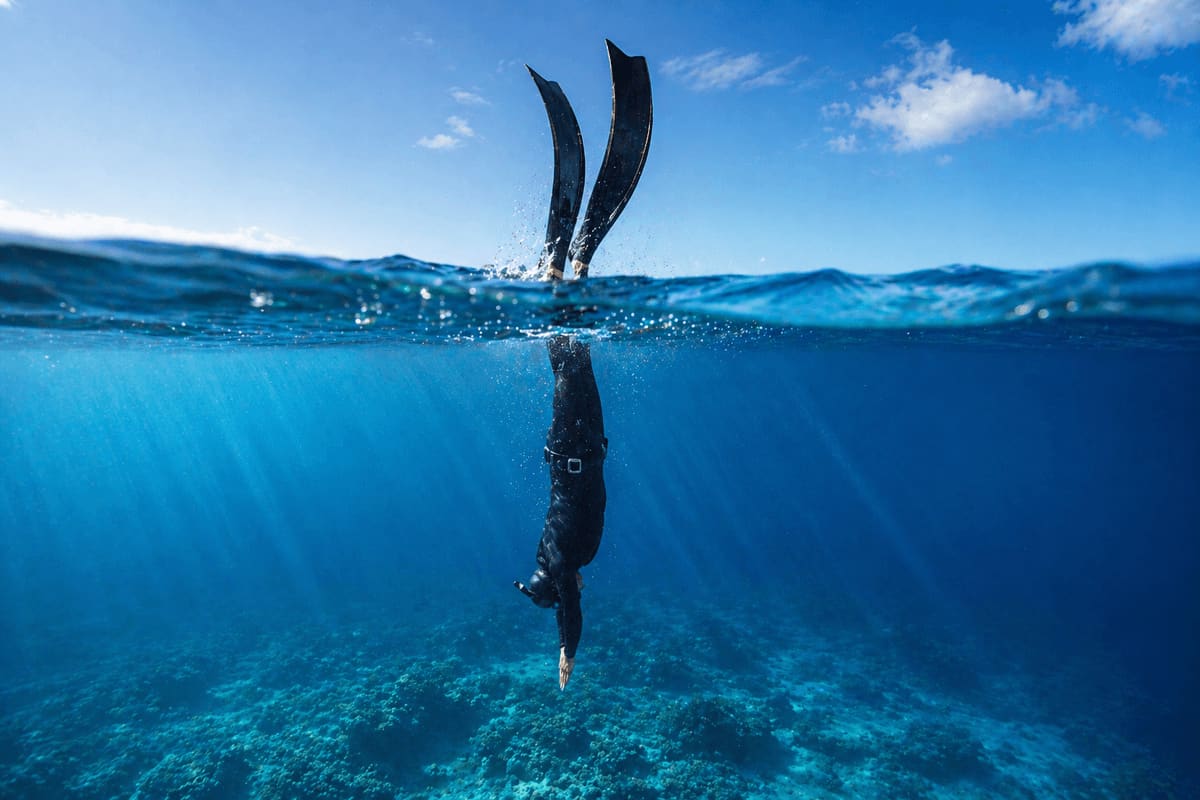
Dahab sits on the Sinai Peninsula of Egypt, at the northern end of the Red Sea where it narrows into the Gulf of Aqaba. The Blue Hole is a submarine sinkhole approximately 150m in diameter that drops vertically to 130m, with direct access from a concrete entry platform at the surface. There is no equivalent site anywhere in the world for sheer accessibility to serious depth: you step off the platform, clip onto the line, and you are over 100m of water column before you've kicked once.
The Blue Hole is also one of the most dangerous dive sites in the world. The arch, a natural tunnel at 55m connecting the sinkhole to the open sea, has claimed hundreds of lives, almost entirely from divers who reached that depth without the preparation required to survive it. The Blue Hole itself is not inherently dangerous. The arch is dangerous because of who tries to reach it.
- The lagoon (0-5m)
- Protected sandy area behind a partial reef break. Calm water, ideal for certification confined water sessions and beginners building their first line dives.
- The Wall (5-40m)
- Vertical reef wall around the sinkhole rim. Standard training ground for AIDA 2 and AIDA 3 work, consistent depth access and good visibility.
- The Bell (28m)
- A natural rock formation on the sinkhole wall at 28m. Common turnaround marker for intermediate training dives.
- The Arch (55m)
- Through-tunnel to the open sea. Experienced divers and qualified guides only. Not for recreational training.
Beyond the Blue Hole, other sites in and around Dahab
Dahab has multiple excellent sites beyond the Blue Hole. For certification courses and day-to-day training, many centers prefer them: the Blue Hole can be crowded during peak season, and the other sites offer varied conditions that develop well-rounded divers.
- The Gardens (El Mina)
- Dahab's most accessible site, directly on the main waterfront strip. Coral garden in 2-15m, calm in most conditions, and the standard location for entry-level open water certification sessions.
- The Canyon (El Fanar)
- A coral canyon starting at 5m and descending to 50m+. The walls close in as you descend, creating a corridor feel distinct from the Blue Hole. A 20-30 minute walk from central Dahab or a short taxi.
- Eel Garden
- Sandy bottom at 5-20m with garden eels and macro life. Calm and accessible, popular for relaxed dives and for trainers who want a site with less visual distraction than the Blue Hole wall.
- Islands
- Two coral heads accessible from shore or by short boat ride. Mixed depth 5-25m, best at high tide when current is favorable.
- Lighthouse Reef (Abu Galum)
- North of town, requires a camel taxi or guided 4x4 transfer. Remote, often uncrowded, exceptional visibility and undisturbed reef. Worth the logistics for a half-day trip.
For certification courses, The Gardens handles most confined water work. For depth training beyond 20m, the Blue Hole wall and the Canyon are the standard venues.
Freediving courses and centers in Dahab
Dahab has more freediving centers per capita than any other destination in the world. The waterfront strip has them every hundred meters: AIDA, SSI, Molchanovs, and PADI certified centers operating year-round. Competition keeps prices honest, and the community is small enough that reputation matters: centers with poor instruction don't last.
Courses available at major centers
Most centers offer package deals combining certification with accommodation. For a beginner coming for 5-7 days, a course-plus-room package at $300-450 total is typical and represents strong value against equivalent Western destinations.
When to go, month by month
Best months for a first trip: March-May or October-November. The combination of warm water, bearable air temperature, and non-peak availability from centers makes these windows the most productive for a training trip.
Getting there and practical logistics
- Getting there
- Fly to Sharm el-Sheikh airport (SSH), 45-60 minute transfer to Dahab by taxi or shared shuttle ($20-35). Direct charter flights from European cities in season; connections via Cairo or Istanbul from North America.
- Visa
- Most nationalities receive a 30-day Sinai-only entry permit on arrival at SSH at no cost. This covers Dahab. Confirm current entry requirements for your passport before traveling.
- Accommodation
- Budget guesthouses from $15-25/night within walking distance of the waterfront. Dive-focused hotels with good facilities run $40-80/night. Staying within 5 minutes of your center simplifies early-morning session logistics significantly.
- Currency
- Egyptian Pound (EGP). Course fees are often quoted in USD and can usually be paid in either currency. ATMs available in central Dahab; daily withdrawal limits apply, so carry some USD cash as backup.
- Equipment
- All rental gear (mask, fins, wetsuit, weight belt) is available from centers and typically included in course fees. If you have a fitted low-volume mask, bring it, fit is personal enough that rental masks rarely perform as well. Check baggage weight limits before packing long-blade fins.
- SIM and connectivity
- 4G coverage throughout town. Egyptian SIMs are inexpensive and available at the airport. Most guesthouses and centers have wifi.
Dahab vs the Philippines, which destination fits your goals?
Choose Dahab if depth progression is the primary goal. The Blue Hole's shore access means 8-10 training dives in a day without any boat logistics, impossible at most destinations. The density of experienced instructors and the depth-focused culture make it the most efficient place in the world to build deep diving technique.
Choose the Philippines if exceptional marine life alongside the freediving matters to you. Panglao's biodiversity, warm water, and relaxed atmosphere make every dive genuinely enjoyable independent of depth achievements. The Philippines also combines better with general travel, longer stays that mix freediving with island-hopping are easier to build than in Dahab.