
Safety First
The dive reflex does not make breath-holding in water safe to practice alone. Any in-water breath-hold, whether static apnea, facial immersion holds, or depth diving, requires a trained buddy watching continuously. Hypoxic blackout gives no warning. Practice dry facial-immersion drills alone if you wish, but never hold your breath in or near water without a partner.
A switch humans share with seals
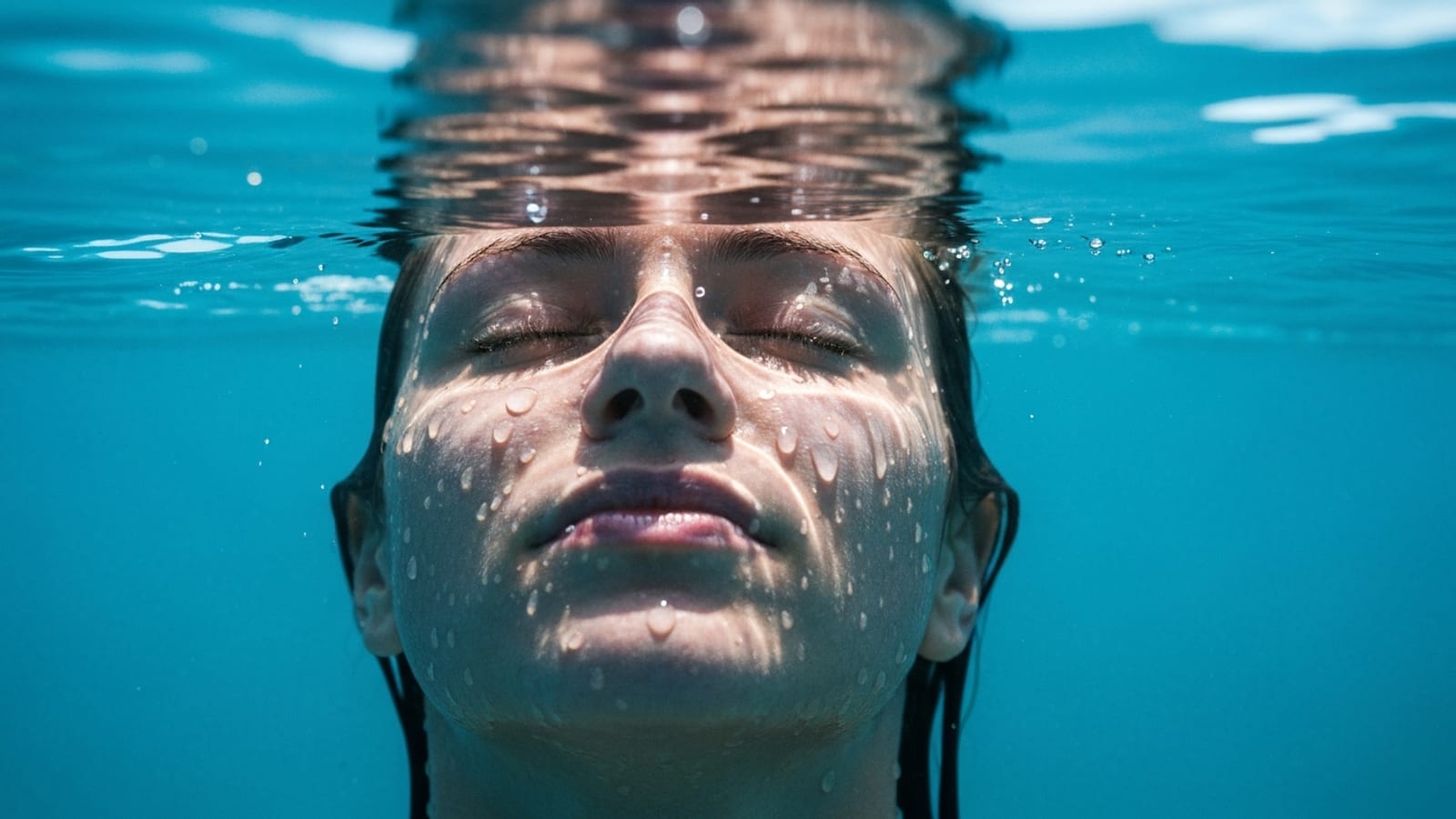
Put your face in cold water and hold your breath, and your body does something automatic. Your heart slows. Blood drains from your hands and feet toward your chest and head. Inside your lungs, plasma seeps into the tissue to keep the chest from collapsing under pressure. None of this is conscious. It is the mammalian dive reflex, sometimes called the diving response, and it is the single biggest reason a human can hold a breath underwater far longer than the same person can hold it sitting in a chair. If you are new to all this, start with what freediving actually is and then come back here for the physiology.
The reflex is not a freediving trick. It is hardware. Every mammal carries it, inherited from a common ancestor, and it sits dormant until the right stimulus switches it on. For a freediver, learning to invite the reflex rather than fight it is the difference between a tense two-minute hold and a relaxed four-minute one.
What actually triggers it: cold water and a held breath
The reflex has two triggers, and they stack. The first is apnea, simply holding your breath. The second is cold water on the face. Either one alone produces a weak response. Together they produce a strong one.
The facial trigger runs through the trigeminal nerve, the fifth cranial nerve, which carries sensation from the forehead, eyes, nose, and cheeks. Receptors in this region are densely packed and unusually sensitive to cold and wetness. When cold water hits them, the trigeminal nerve fires a signal to the brainstem, which responds along two channels: the vagus nerve slows the heart, and the sympathetic nervous system clamps down the blood vessels in the limbs. This is why wetting just the face matters more than wetting the rest of the body, and why splashing your forehead and eyes works while a cold shower on your back does little. The same nerve pathway is why cold-water freediving can feel so different from diving in the tropics.
- Trigger 1: Apnea
- Holding the breath alone produces mild bradycardia as rising CO2 and the breath-hold itself begin to slow the heart. This is the weaker of the two triggers.
- Trigger 2: Cold face
- Cold water on the forehead, eyes, and cheeks stimulates the trigeminal nerve. The colder the water and the more of the face covered, the stronger the response. Around 10-15C is more potent than warm water.
- Both together
- Apnea plus a cold face produces the full reflex: the strongest bradycardia and vasoconstriction. This is the state a freediver wants on every descent.
The four responses, and what each one buys you
The reflex is not one event. It is four coordinated changes, each conserving or supplying oxygen in a different way. Understanding them individually is what lets you tell whether your hold is being limited by relaxation, conditioning, or technique.
1. Bradycardia: the heart slows down
The most measurable response is a drop in heart rate. A slower heart consumes less oxygen and pumps less blood per minute, stretching the oxygen you have. In humans the drop is commonly 10 to 25 percent, and it can be far steeper. Heart rates falling from the high 80s into the high 30s within seconds of facial immersion have been recorded. The effect appears fast, often within the first ten to thirty seconds of a cold-face hold.
2. Peripheral vasoconstriction: blood pulls inward
At the same time, blood vessels in the arms and legs narrow. This pushes blood out of the limbs and toward the core, meaning the heart, lungs, and brain. The limbs can tolerate low oxygen for a while; the brain cannot. By prioritizing the organs that fail first, vasoconstriction protects the parts of you that matter most during a breath-hold. It also explains why your hands and feet feel cold and a little numb after a long dive session.
3. Blood shift: plasma fills the chest
This one is the reason humans can dive deep at all. As you descend, water pressure compresses the air in your lungs. Without a counter, the chest would eventually be crushed past the point the lungs can shrink. The blood shift solves it: vasoconstriction and pressure drive blood, roughly 750 to 1,200 mL or around 15 to 25 percent of total blood volume, into the vessels of the chest, and plasma seeps into the lung tissue and alveoli. Because blood and plasma do not compress the way air does, this fluid fills the space the shrinking air leaves behind. The chest stays supported, and the lungs are protected from pressure damage well below the depth at which they would otherwise collapse.
4. Spleen contraction: a reserve of red blood cells
The spleen stores a reserve of oxygen-carrying red blood cells. When the reflex activates, especially over repeated dives in a session, the spleen contracts and squeezes those cells into circulation. This raises hematocrit and hemoglobin and boosts oxygen-carrying capacity by roughly 5 to 10 percent. Unlike the other three responses, the splenic boost builds across a session. It kicks in after the first dive and stays elevated for 60 to 90 minutes after the last one, which is part of why divers often feel stronger on later dives than on the first.
Why water beats a dry breath-hold
A breath-hold on dry land gives your body only one of the two triggers. You get the mild apnea response, but the trigeminal stimulus is missing, so bradycardia and vasoconstriction stay shallow. Add cold water on the face and the reflex deepens. This is the simple reason most people post longer, calmer holds face-down in water than seated in a chair, and it is worth keeping in mind when you compare your dry numbers to your wet ones. If you are building hold time, the structured tables in breath-hold training work on both: dry for CO2 tolerance, wet to recruit the reflex.
It also reframes how to think about static apnea. Floating face-down in cool water is not just a convenient position. The water on your face is actively triggering the reflex that makes the long hold possible. The same hold attempted dry would feel harder and end sooner for most divers.
Seals, dolphins, and the version we got
The reflex is named mammalian because we share it with every other mammal, and the marine ones reveal what the wiring can really do. A diving seal can cut its heart rate by around 90 percent and carries a spleen and blood volume far larger, relative to body size, than ours. Whales and dolphins show the same coordinated shutdown of non-essential circulation. The human version is the same reflex running on more modest hardware. The trigeminal trigger, the vagal brake on the heart, and the splenic reserve are all present, just weaker.
The most striking human example is the Bajau, a sea-nomad people of Southeast Asia who spend much of the day diving for food. Researchers found the Bajau carry spleens around 50 percent larger than a neighboring non-diving population, linked to a specific gene variant. Generations of daily diving appear to have selected for a bigger oxygen reserve. It is a clear sign that the splenic side of the reflex responds to diving life, over a lifetime and across generations.
"We are not built for the water, but we are not locked out of it either. The reflex is the door, and it opens the moment the cold hits your face."
How freedivers strengthen the reflex
The reflex is partly trainable, and relaxation is the biggest lever you have. A tense, stressed body keeps sympathetic arousal high, which fights the bradycardia the reflex is trying to produce. A calm body lets it deepen. This is why breath control and mental calm matter so much. Work through breathing techniques until a slow, relaxed pre-dive state is automatic, and the reflex has room to work.
Beyond relaxation, the reflex responds to consistent exposure. Regular breath-hold practice and repeated dives within and across sessions strengthen bradycardia and vasoconstriction over weeks and months. The blood-shift response in particular adapts slowly. It builds with consistent depth diving over a season, not over a weekend.
What actually moves the needle
- Relaxation first
- A calm nervous system is the precondition for a deep reflex. Slow breathing and a quiet mind before the hold let bradycardia develop. Tension is the most common thing blunting a beginner's reflex.
- Cold-face exposure
- Practicing holds with the face in cool water trains the trigeminal trigger. Dry facial-immersion drills in a bowl are a safe, solo way to rehearse the sensation and watch the heart-rate drop.
- Warm-up dives
- Two or three easy dives at the start of a session recruit the reflex and begin spleen contraction, so the working dives land on a body that is already primed.
- Consistency over time
- Bradycardia and vasoconstriction sharpen over weeks of regular practice. Blood shift and splenic capacity adapt over months and years of diving.
None of this happens overnight, and the honest answer to how long you can stay down depends on far more than the reflex alone. For a realistic picture of breath-hold times and what limits them, see how long you can hold your breath. Train the reflex, train your calm, and let the body do what it has always known how to do.