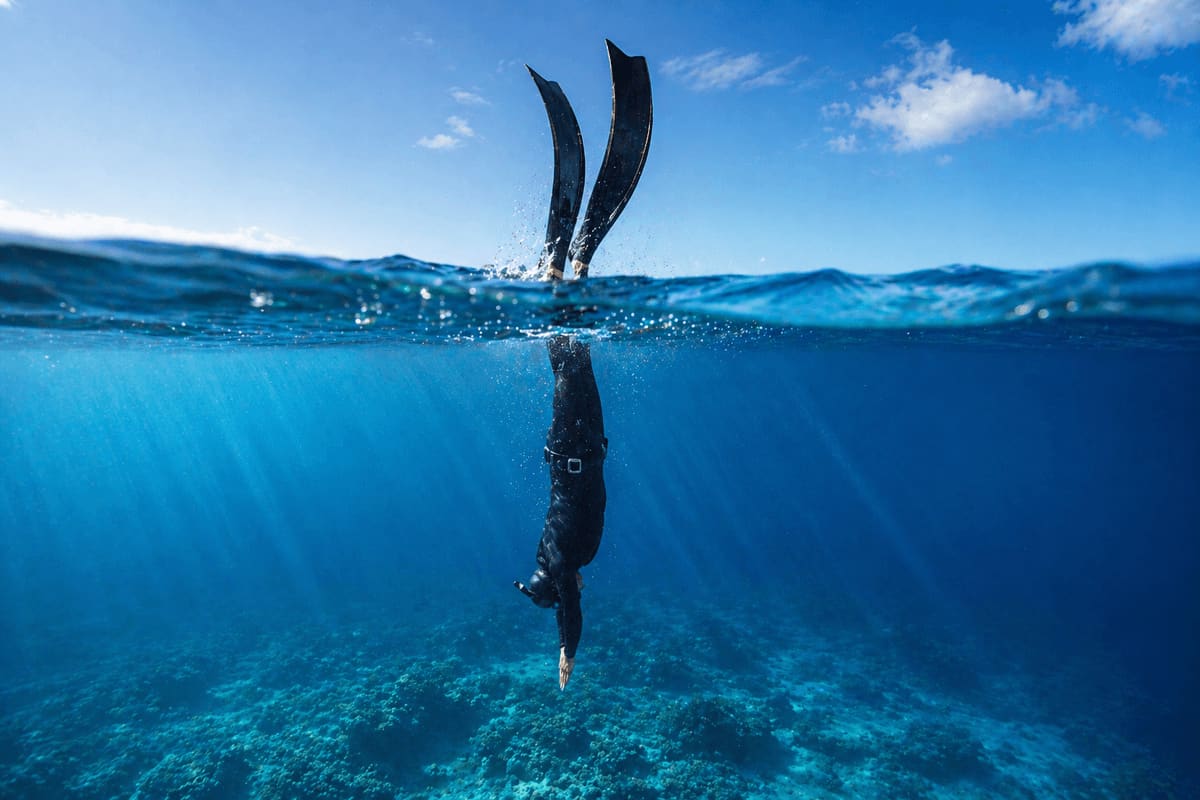

Why Mexico belongs in every freediver's travel list
Mexico offers something no other country can match: two entirely different freediving environments within a two-hour drive of the same airport. Cancun International (CUN) puts you within reach of the Caribbean reef systems off Cozumel and Playa del Carmen on one side, and the Yucatan cenote network on the other. The cenotes are unlike anything else on Earth: freshwater limestone sinkholes connected by 1,400km of mapped underground river systems, with visibility that regularly exceeds 100m in the fresh-water zone. The Caribbean side brings world-class wall diving, 20-40m visibility, and water temperatures above 26°C every month of the year.
The cenote environment is the primary reason serious freedivers put Mexico on the list. The physics of the water (a halocline where fresh and salt water meet in a shimmering density boundary, hydrogen sulfide clouds that create false-bottom illusions, root systems hanging from cave ceilings, and shafts of sunlight cutting through fresh water with 100m+ clarity) produce visual experiences that have no equivalent in open-ocean or reef diving. Cozumel's Palancar reef is legitimately one of the best wall dives in the Caribbean. The combination is rare. If you plan to film the light shafts, our guide to the best underwater camera for freediving covers depth ratings, color correction and hands-free mounts.
The cenotes: what freedivers need to know
The Yucatan Peninsula sits on a thick limestone shelf. Rainwater acidifies as it absorbs CO2, then dissolves the limestone over thousands of years, carving cave systems. When cave ceilings collapse, they create cenotes: surface-accessible pools connected to the underwater network below. For freedivers, they provide extraordinary visibility, constant water temperature, and environments that exist nowhere else on the planet.
The key cenotes for freedivers near Tulum
- The Pit (Cenote Pit / Pit of Tulum)
- The headline cenote for serious freedivers. Depth approximately 120m, with an air pocket at 12m where the cave opens above the waterline. At around 30m, a hydrogen sulfide cloud (a dense, milky white layer caused by decomposing organic matter) creates a striking false-bottom effect from above. The cloud is navigable but obscures visibility within it and creates genuine disorientation. Below the cloud, the water clears again all the way to the floor at 120m. One of the deepest recreational freediving targets on the planet.
- Dos Ojos
- Two interconnected sinkholes (the 'two eyes') with exceptional freshwater visibility exceeding 100m horizontal in calm conditions. Depths range from 5-15m in the main chambers, making it accessible to beginner and intermediate freedivers. The cave passages connecting the two eyes are navigated by scuba; freedivers use the open chambers. The bat cave section is particularly dramatic: a large cavern with light filtering through from above.
- Cenote Angelita
- Known for one of the most striking halocline effects in the entire Yucatan. At approximately 30m depth, hydrogen sulfide and a particularly sharp halocline combine to create what looks like an underwater river or island: a solid-looking layer of haze cutting across the cenote, with trees and branches sitting 'on' the cloud and dark water stretching below. The effect is photographed constantly, but seeing it in person on a freedive is genuinely disorienting. Depth to the floor is around 60m.
- Gran Cenote (near Tulum)
- One of the most accessible and photogenic cenotes in the Tulum area. Open-sky sections combined with cavern areas. Depths of 4-10m in the main sections, with visibility exceeding 100m. Stalagmites and stalactites are visible through the clear water. Good for beginners due to shallow depths and multiple entry points. Busy in peak season. Arrive early.
- Car Wash (Aktun Ha)
- Named for the local practice of washing cars in its runoff. A more open cenote with excellent freshwater clarity and depths of 5-15m. Lily pads float on the surface section. The deeper cavern area has good viz and a manageable halocline. Less crowded than Gran Cenote and popular with freediving schools for course work due to consistent conditions.
- Tajma Ha
- A tiered cenote with multiple depth levels, good for freediving progression. Multiple skylights provide natural illumination. Depths from 3m to 25m across the different sections. The name, a play on Taj Mahal, reflects the grandeur of the main chamber. Less-visited than the headline sites and worth adding to a multi-day cenote itinerary.
- Cenote Chac Mool
- A cavern cenote with a mix of open-sky and overhead sections. Freedivers use the open cavern areas; cave divers (with scuba) explore the tunnel system. Depth in the main chamber to around 10m. The light shafts that enter in the morning hours create extraordinary underwater photography conditions. Located on the road between Playa del Carmen and Tulum, convenient for day trips from either base.
Reef and open water: Cozumel, Playa del Carmen, and Cancun
Mexico's Caribbean coastline runs along the Mesoamerican Barrier Reef, the second largest reef system in the world after Australia's Great Barrier Reef. The reef runs from the tip of the Yucatan Peninsula down through Belize, Guatemala, and Honduras. The sections off Cozumel and Playa del Carmen are the most accessible and well-developed for diving, with visibility that regularly hits 30-40m on the reef and drops further along the wall dives.
Cozumel: the Caribbean's best wall diving
Cozumel sits approximately 20km offshore from Playa del Carmen, reached by ferry in 45 minutes. The island's west coast faces the Cozumel Channel, which generates consistent gentle currents that keep the water clear and the reef filter-feeding year-round. Visibility is typically 30-40m and regularly exceeds 40m in optimal conditions. Palancar Reef is the headline site: a wall system that drops from 5m at the crest to over 30m at the base with cuts, tunnels, canyons, and overhangs. The current drift diving Cozumel is famous for works equally well for freedivers: you cover ground effortlessly while the reef scrolls past.
- Palancar Reef
- A wall system on Cozumel's southwest coast. The reef crest sits at 5-8m; the wall drops to 30m with tunnels, overhangs, and cuts forming a complex three-dimensional structure. Massive sponges, black coral, and eagle rays are regular sightings. Visibility 30-40m, often more. Current drift freediving here is excellent: the current is typically gentle and predictable on the west coast.
- Colombia Reef
- South of Palancar, considered by many divers to be Cozumel's most spectacular coral structure. Buttresses and valleys at 15-30m with extraordinary coral density. Less trafficked than Palancar on weekday mornings. Requires a boat from Cozumel town. All operators run here.
- Santa Rosa Wall
- A steep wall with the crest at 10m and the drop continuing to 30m+. Famous for the current that sweeps divers along it: a long drift freedive covering 500-800m in a single run is achievable. Resident nurse sharks often rest at the base of the wall.
- MUSA (Cancun Underwater Museum)
- An installation of over 500 submerged sculptures off the coast of Cancun and Isla Mujeres, at depths of 3-8m. The sculptures were designed to promote reef-building. Coral has colonized the concrete over the years. Extremely accessible for freedivers: depths of 3-8m, calm protected water in the lagoon zone, and a unique visual experience. Boat access from Cancun or Isla Mujeres. Not a reef dive, but one of the most distinctive freediving experiences in the Caribbean.
- Playa del Carmen reef
- The beach town's nearshore reef runs parallel to the coast at 5-20m. The reef is accessible from shore by swimming 100-200m out. Visibility is typically 15-25m, lower than Cozumel but convenient for a freediving session from the hotel zone. Garden eels, sea turtles, and reef fish are common. Not as spectacular as Cozumel but useful for warm-up sessions or days without boat access.
Freediving courses and centers in Mexico
Tulum and Playa del Carmen have the highest concentration of freediving-specific schools in Mexico. Both towns have year-round operations: the combination of constant water temperature and the cenote network means there is no off-season for instruction. Cancun and Cozumel have recreational freediving experiences available but fewer dedicated freediving schools focused on certification.
Schools operating in Tulum and Playa del Carmen include Freedive Tulum, Freediving Cafe, Pro Dive Mexico, and several independent AIDA instructors based in both towns. Most schools include cenote session days as part of their intermediate and advanced curriculum: the cenote environment provides depth targets unavailable in pool or open-water settings. Confirm whether cenote entry fees are included in course pricing, as these vary by site ($5-20 per cenote).
When to go: seasons and water conditions
January and February are the strongest months for freediving conditions across both the cenote and reef environments. Low humidity, no rain, no jellyfish, minimum crowds outside the holiday window, and the Cozumel current running clean and clear. December works well except for the Christmas and New Year surge that pushes accommodation prices and cenote visitor numbers up significantly. If flexibility exists, aim for January-February.
Getting there and practical logistics
- Flights
- Fly to Cancun International (CUN). Direct flights from most major US cities: New York (3.5h), Miami (1.5h), Houston (2h), Los Angeles (4h). Multiple carriers including American, Delta, United, and budget options (Frontier, Spirit, Volaris). From Europe: connecting flights through Miami, Houston, or Atlanta. Cancun is one of Mexico's highest-traffic tourist airports. Booking in advance and checking luggage fees for fins is worth doing.
- Getting to Tulum and Playa del Carmen
- Playa del Carmen is approximately 60km south of Cancun airport: 45-60 minutes by car, 1 hour by ADO bus ($12-15 USD, runs frequently). Tulum is approximately 130km south: 1.5-2 hours by car, 2 hours by ADO bus ($20 USD). Renting a car at the airport is strongly recommended for cenote access. Most cenotes are on secondary roads off Highway 307 and are not serviced by regular public transport. A rental car costs $30-60/day and opens the entire cenote network.
- Cenote entry fees and guides
- Most cenotes charge park entry fees of $5-20 USD. Some nationally protected parks charge higher fees. Many cenotes, particularly those within Biosphere Reserve protected areas, require you to hire a local guide for freediving. Guide fees are typically $15-30 USD per session. This is not optional: access is denied without a guide in these parks. The guide requirement is a safety measure given the overhead environments; it is genuinely useful for first-time visitors who don't know the sites.
- Accommodation bases
- Playa del Carmen: the most convenient base for combining Cozumel day trips (45-min ferry) with cenote access. Large selection of accommodation across all price ranges, strong restaurant and nightlife scene, walkable beach zone. Tulum: quieter, positioned closer to the best cenotes (Dos Ojos, The Pit, Cenote Angelita are 10-25 minutes south of town), stronger wellness-and-freediving community culture. More expensive boutique accommodation. Cancun: convenient for the airport but 1-2 hours from the best cenotes; the hotel zone is resort-focused rather than freediving-focused.
- Equipment
- Freediving gear rental is available from schools and dive shops in Tulum and Playa del Carmen. Low-volume masks, long-blade freediving fins, and wetsuits can be rented. If you have a fitted mask, bring it. Rental masks are rarely optimal for deep equalization work. Long-blade carbon or fiberglass fins can be checked as sports equipment on most US carriers. A 3mm wetsuit covers most cenote and reef conditions; a 5mm is worth packing if you plan extended depth sessions in the cenotes.
- Currency and costs
- Mexican peso (MXN). USD is widely accepted in tourist areas of the Riviera Maya at roughly 17-18 pesos to the dollar (check current rates). ATMs dispense pesos; many cenote parks and guides are cash-only. Tulum has a reputation for variable ATM reliability. Arrive with sufficient cash for cenote fees and guide payments. US credit cards work at most hotels and larger restaurants. All-in daily budget for a freediving-focused trip (accommodation, cenotes, food, transport): $100-180 USD depending on accommodation level.
- Visas
- US citizens do not need a visa for Mexico. A tourist card (FMM) is issued on entry, valid for up to 180 days. Canadian, UK, EU, and Australian citizens are also visa-exempt for tourist stays. Keep the tourist card paper carefully: you need it when departing. A tourist tax is typically included in the airline ticket price for Cancun arrivals.