
Why Tenerife belongs on the European freediving map
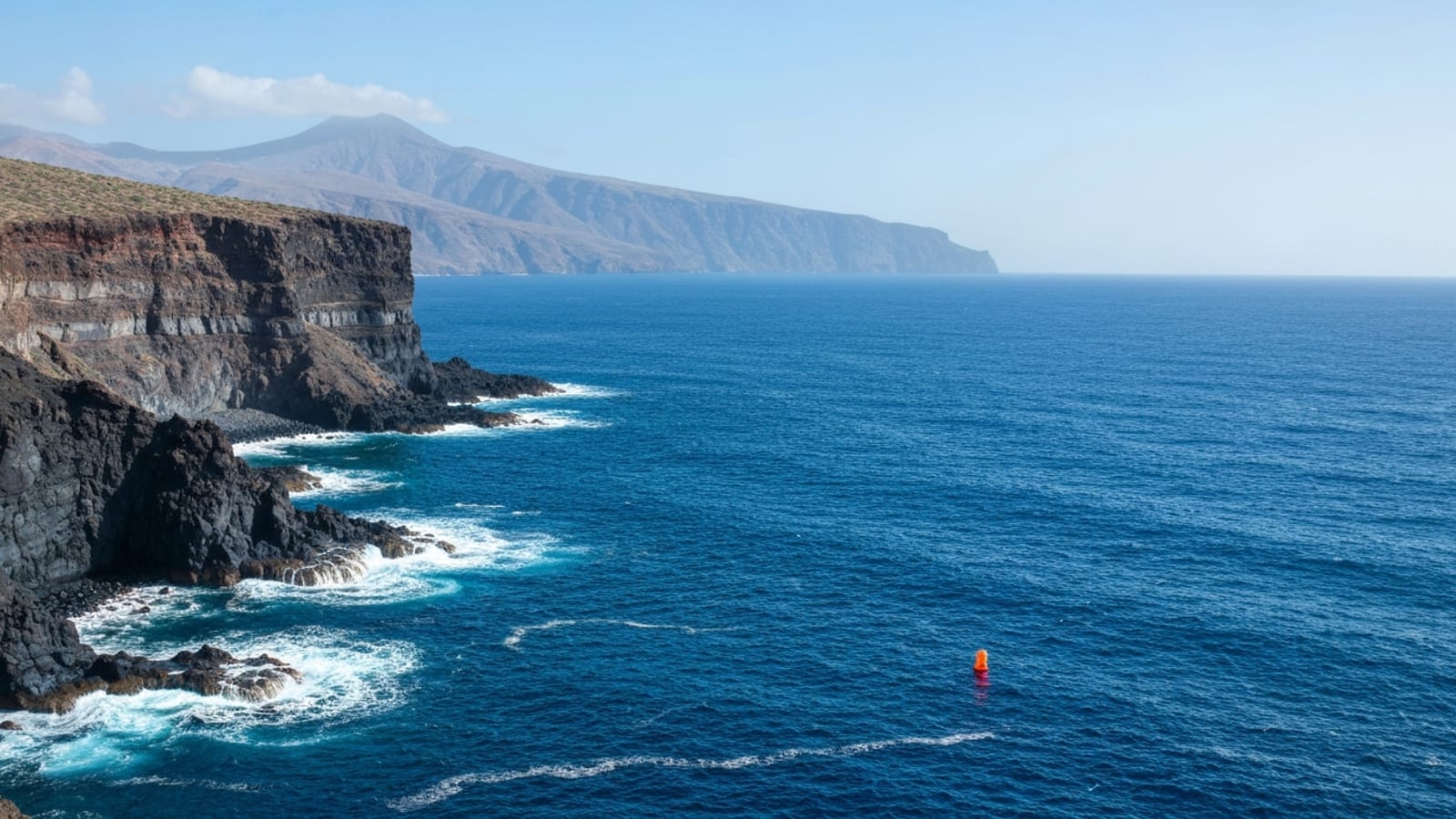
Tenerife is the largest of the Canary Islands, a volcanic peak rising out of the Atlantic off the coast of Morocco. For freedivers the geology is the point. Volcanic islands have no continental shelf, so the seabed plunges away within meters of the shoreline. At several east and south coast sites you can swim out a short distance and have 50m, 80m, even 100m of water directly beneath you. There is no long boat ride to deep water and no shallow reef flat to cross first.
The second draw is the calendar. Tenerife sits far enough south that the sea never drops below roughly 19C, which means depth training continues straight through winter while the Mediterranean and most of northern Europe are too cold to use. This is exactly why so many competitive divers treat the island as an off-season base. If you have read our guide to freediving in Greece, the contrast is simple: Greece is a glorious summer destination that mostly shuts down by November, while Tenerife runs all twelve months.
Tenerife freediving at a glance
- Water temperature
- Roughly 19-20C in winter (December to March), warming to 22-24C in late summer and autumn (August to November). Notably cooler than tropical destinations. Temperature changes very little with depth, only about 1C from the surface to 50m.
- Season
- Year-round. Late summer and autumn are warmest and calmest. Winter is cooler but still very diveable and is peak season for off-season depth training by European athletes.
- Depth available
- 20m to roughly 100m within a short swim of shore at the best east-coast sites. Fixed training lines at several schools run to 75m and beyond, with deeper open-water setups available for advanced divers.
- Visibility
- Commonly 20-30m, occasionally higher. Generally better on the sheltered east and south coasts than the more exposed north.
- Wetsuit
- 5mm open-cell for winter and spring, 3mm for late summer. Bring a 5mm if you plan to train across multiple seasons or do long sessions.
- Cost
- Beginner certification about 300-380 EUR. Coached training days roughly 50-90 EUR. Currency is the Euro.
Where to dive: the east and south coasts
The sheltered east coast around Tabaiba and Radazul, plus the south coast near Las Galletas and the Adeje area, hold the best freediving conditions on the island. These coasts are protected from the prevailing trade winds, so the surface stays calmer and visibility holds up. The west coast around Los Gigantes has dramatic deep water too but the currents there demand more experience.
Tabaiba Bay
Tabaiba, a quiet village about 14km south of the capital Santa Cruz, is the headline depth site. The bay is sheltered from almost all directions with no currents and a near-permanently flat surface. The entry is an easy walk from shore, and depth runs from 20m to around 100m within a 50m swim. There is also a well-preserved wreck sitting at about 30m, which makes a good intermediate target dive. This is where Atlantis Freediving bases its program.
Radazul
Just south of Tabaiba, the Radazul area is home to fixed training lines set at staged depths, commonly around 20, 35, 50, and 75m, all within swimming distance of the coast. Staged lines like these are ideal for structured depth progression because you can pick a target that matches your current level and move down as you build. Apnea Canarias operates here.
Las Galletas and the south coast
The south coast around Las Galletas is the most tourist-accessible base, close to the resort areas of Los Cristianos and Costa Adeje and only about 15 minutes from the airport. Schools here run beginner sessions at sites such as Los Tarajales beach, which has varied depth and easy access. The south coast suits divers who want certification courses combined with easy logistics, similar in convenience to the resort-adjacent setups described in our Dahab guide, though with cooler water.
Water temperature and what to wear
This is the one area where Tenerife asks more of you than the tropics. The Atlantic here is clear and pleasant but it is not warm. Winter water sits around 19-20C and summer peaks around 23-24C. For a single short dive that feels fine, but freediving sessions involve repeated descents with long surface intervals, and you cool steadily across a two-hour session. Underdressing is the most common mistake visitors make.
A correctly weighted suit matters as much as thickness. A thicker wetsuit adds buoyancy, so you carry more lead, which changes your freefall and turn. If you are coming from warm-water diving in a 1.5mm or no suit, expect to recalibrate your weighting on day one. Our wetsuit thickness guide covers how to choose, and if you want to push into the colder end of the year our notes on cold-water freediving cover hoods, gloves, and managing heat loss across a long session.
Schools and courses
Tenerife has a dense cluster of freediving schools for an island its size, teaching SSI, AIDA, and Molchanovs across the full beginner-to-advanced range. The concentration on the east and south coasts means you have real choice of instructor, agency, and training style. Several schools also support deep training below 60m with a fast boat, counterweight system, sonar, and dedicated safety freedivers carrying scooters and oxygen.
- Atlantis Freediving (Tabaiba)
- An SSI school based at Tabaiba Bay with a competitive instructor team. Runs the full SSI ladder from Level 1 through advanced performance courses, using the bay's deep water directly off the shore.
- Apnea Canarias (Radazul area)
- Long-running school with fixed depth lines at staged depths and experience supporting deep-diving professionals. Teaches multiple agencies and caters to serious depth progression.
- Apnea Academy West Europe / south coast schools
- Several operators around Las Galletas and the south run beginner Level 1 courses over 2-4 days with a mix of theory, confined-water, and open-water sessions, well suited to first-timers.
If you are still deciding between agencies and levels before you arrive, our breakdown of the best freediving certification compares SSI, AIDA, and Molchanovs in detail. You can also browse the full freediving courses hub for other destinations and course types.
Getting there and practical logistics
The big practical advantage of Tenerife is access. It is a short-to-medium flight from most of Western Europe with no meaningful time-zone change, no jet lag, and no long-haul cost. That is a large part of why European athletes use it as a winter training base rather than flying to Egypt or Southeast Asia.
- Flights
- Tenerife South (TFS) is the airport to use for the freediving coasts. It has direct flights from across the UK, Germany, Scandinavia, and most of Western Europe, typically 4-5 hours. Tenerife North (TFN) mainly handles inter-island and mainland Spain routes. There is no time difference with the UK and Portugal and only one hour from Central Europe.
- Airport transfers
- Las Galletas is about 15 minutes from TFS by car (taxi roughly 40-55 EUR, hourly bus on line 415). Los Cristianos is about 30 minutes (taxi from around 34 EUR, frequent line 111 bus). Tabaiba and the east coast are roughly 30 minutes by car. A rental car is the most practical option for daily trips to the dive sites.
- Accommodation
- The south coast (Las Galletas, Los Cristianos, Costa Adeje) has the widest range of apartments and hotels at all price points. The east coast around Tabaiba and Radazul is quieter and closer to the deep training bays. Many schools can recommend or arrange nearby stays for course and camp guests.
- Currency and language
- Tenerife is part of Spain and uses the Euro. Spanish is the local language but English is widely spoken in tourist and diving contexts. EU/EEA citizens need no visa; UK, US, Canadian, and Australian visitors can stay up to 90 days under Schengen rules.
- Equipment
- Dedicated freediving schools rent open-cell wetsuits, long-blade fins, and low-volume masks. General scuba shops often stock only recreational gear, so confirm freediving-specific rental in advance. Bring your own mask and, if you have one, your own correctly fitted suit for warmth and weighting consistency.
If a short-haul European deep destination is what you are after but you want to compare options, Tenerife sits naturally alongside the Adriatic. Our freediving in Croatia guide covers the summer alternative, while Tenerife wins clearly on year-round access and water that stays diveable through winter.