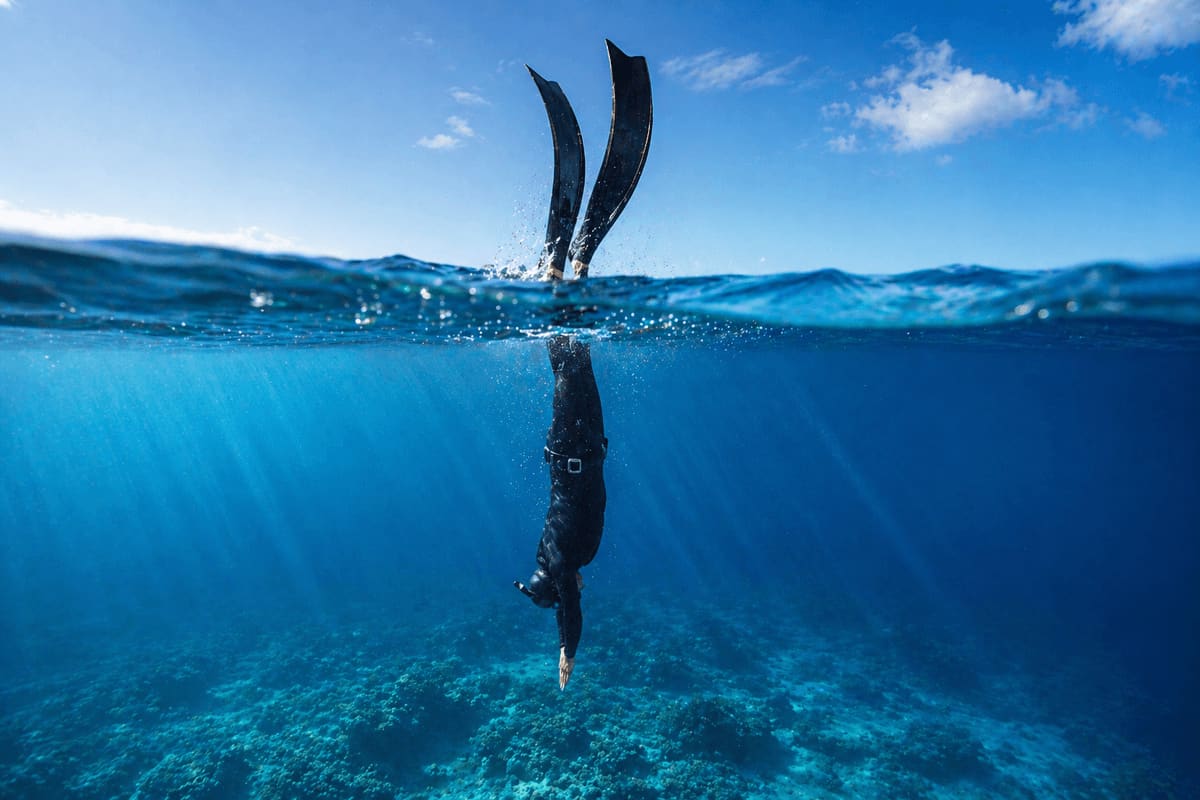

The PADI Freediver Path
PADI is the largest scuba training agency in the world, and its freediving line follows the same modular format most divers already know. The path runs from Basic Freediver, through the flagship Freediver rating, up to Advanced Freediver, Master Freediver, and then the professional Freediver Instructor track. Each step adds depth, longer breath holds, and more refined technique. If you want an agency by agency comparison before committing, start with our freediving certification guide, then come back here for the PADI specifics.
The appeal of the PADI Freediver course is consistency. A center in Hawaii and a center in Thailand teach the same standards, use the same eLearning platform, and issue the same recognized card. That matters when you travel and want a dive shop to trust your rating. For a wider primer on what freediving actually involves before you book, our how to freedive guide covers the basics of breath-hold and equalization.
PADI Freediver Levels and Depth Targets
The program is built as a ladder. You do not have to climb all of it, and many recreational freedivers stop at the core Freediver rating. Here is how the levels break down by depth, key skills, and what you need before you enroll.
What each level covers:
- Basic Freediver
- A confined water only rating with no open water depth requirement. You learn breathing, relaxation, static apnea, and dynamic apnea in a pool. Good for nervous beginners or anyone who wants a low commitment start.
- Freediver
- The core certification most people mean by PADI Freediver. Adds open water constant weight dives to 10m to 16m, free immersion technique, and rescue skills for a fellow freediver.
- Advanced Freediver
- Extends depth to about 20m to 24m, sharpens equalization at depth, and lengthens the static and dynamic targets. This is where mouthfill and Frenzel technique become important.
- Master Freediver
- The top recreational rating, targeting 24m to 32m. Emphasizes advanced equalization, deeper safety and rescue, and consistent performance under a longer hold.
- Freediver Instructor
- The professional path. After Master Freediver you complete instructor training and apprentice sessions, then certify to teach the recreational levels yourself.
How the PADI Freediver Course Is Structured
Every PADI Freediver level uses the same three part format, which keeps the classroom time short and the water time focused. You knock out the theory before you ever get wet, then build skills in a controlled setting, then apply them in open water.
- 01 —eLearning knowledge development: PADI's online course covers breathing physiology, equalization, safety, buddy procedures, and the physics of breath-hold diving. You complete it at home at your own pace and pass short quizzes before class.
- 02 —Confined water session: In a pool or pool-like conditions you practice static apnea, dynamic apnea, recovery breathing, and buddy rescue. This is where relaxation and technique get dialed in without depth pressure.
- 03 —Open water sessions: Two sessions in open water where you perform constant weight and free immersion dives to your level's depth target, practice rescues from depth, and demonstrate safe buddy procedures.
The static and dynamic work is often the hardest part for newcomers, not the depth. Holding your breath calmly for 90 seconds takes practice, and a good instructor spends real time on relaxation and breathe up. If you are still weighing which agency to learn this structure under, our SSI freediving levels breakdown shows a near identical format from a competing agency.
PADI Freediver Cost and Duration in USD
Prices vary by region, instructor ratio, and whether gear rental is bundled, but the ranges below reflect what most US and popular travel destination centers charge. Remember that PADI eLearning is usually a separate fee bundled into the course price, and equipment rental for a low volume mask, long fins, and a wetsuit may be extra.
For most people the full Freediver rating at 250 to 450 USD is the meaningful purchase, since it is the first card that lets you dive open water depth. Budget a bit more if you plan to buy your own gear rather than rent, since long fins and a proper freediving mask add up. Our freediving cost guide breaks down gear and ongoing expenses beyond the certification itself.
- eLearning fee is usually included in the course price but confirm before booking.
- Gear rental may add 25 to 75 USD if not bundled.
- Smaller instructor to student ratios cost more but mean more coaching time.
- Travel destinations like Bali, the Philippines, and Mexico often price lower than US coastal centers.
PADI vs SSI vs AIDA in Brief
PADI is not the only game in freediving, and the three main agencies teach broadly similar recreational skills. The short version: PADI has the biggest network and strongest brand recognition, SSI runs a near identical structure often at a slightly lower price, and AIDA carries the most weight in competitive freediving circles. For a full head to head with depth standards and pricing, see our AIDA vs PADI comparison.
- PADI
- Largest global reach, familiar brand, consistent standards. Great if you travel and want any dive shop to recognize your card instantly.
- SSI
- Very similar level structure to PADI, frequently a bit cheaper, and strong in Southeast Asia and Europe. Free digital materials in many cases.
- AIDA
- The competitive federation. More performance focused, respected by depth athletes, though its recreational path is a little less standardized than PADI or SSI.
In practice the certifying card matters less than the instructor. A patient, experienced coach at a nearby center will teach you more than a famous logo. Use our freediving near me guide to find qualified instructors around you before you fixate on one agency.
How to Start Your PADI Freediver Certification
Getting going is straightforward. Pick a PADI Freediver center, confirm the all-in price and gear situation, and start the eLearning at home so you arrive ready for water time. Most people are comfortable jumping straight into the full Freediver rating rather than Basic, unless they feel anxious in open water.
- 01 —Choose a nearby or destination PADI Freediver center and confirm the total cost.
- 02 —Complete the PADI eLearning knowledge development before your first in person day.
- 03 —Attend the confined water session to build static, dynamic, and rescue skills.
- 04 —Complete two open water sessions to hit your depth target and earn the card.
- 05 —Decide whether to continue toward Advanced or Master Freediver later.
Whichever level you aim for, treat the certification as the start of a longer skill, not a finish line. Depth comes with relaxation and repetition, not force. Keep training with a certified buddy, revisit the fundamentals in our how to freedive guide, and progress one level at a time.